Welcome to my blog! Thank you for clicking into my little corner of the online world where I share my landscape passion through my images and tips for other landscape photographers! Sign up for my newsletter and get your free ebook with 25 Tips for Impactful Landscape Photography.
Links to Check Out!
Looking for filters to add to your creativity? Check out MAVEN FILTERS!
Listen to my podcast episode with Jen Ritchie on Wildlife Conversations or watch on YouTube HERE.
Listen to my episode HERE with Austin James Jackson on his podcast, Master the Moment.
Listen to my episode on the Landscape Photography World podcast, hosted by Grant Swinbourne.
Listen to my conversation with Brenda Patrella on the Outdoor Photography Podcast from October 4, 2022
Check out my podcast episode over on InFocus Women - with Sarina Jackson and Steph Vella
Listen to my conversation with Allison Jacobs on “The Creative Frame” podcast.
Read Kristen’s article, “The Allure of Nature”, in the December, 2020 issue of Outdoor Photographer.
Listen to Kristen & Matt Payne’s conversation on the F Stop Collaborate & Listen podcast aired January 6, 2021.


Photographing Water With Creative Exposures
When first learning to shoot in manual mode, we learn that aperture, ISO and shutter speed create the exposure triangle. If we change one of these settings, we then have to alter another one to achieve proper exposure. In the beginning, when I was learning the exposure triangle, I was shooting more portraits of my kids and loving the beautiful blur that came from wide open apertures. In creating this blur and bokeh, my shutter speed was typically fast to counterbalance the wide apertures in the exposure triangle.
Over time and especially as I fell in love with landscape photography, I learned to consider shutter speed as not only a part of the exposure triangle and important in freezing the motion of my fast moving toddlers, but as a creative choice. In fact, creative shutter speed use is one of my favorite techniques when shooting moving water within a landscape.
There are 3 main choices when it comes to using shutter speed to capture water: 1) A fast shutter speed used to freeze the motion of the water and maintain texture. 2) A slower shutter speed in the range of say .4 seconds - 3 seconds which will smooth the water a bit but maintain some texture and shape and 3) a very slow shutter speed of at least 5 seconds or longer that will smooth the water completely and create a dreamy quality. Each of these exposure times creates a different texture of the water and mood in the overall image.

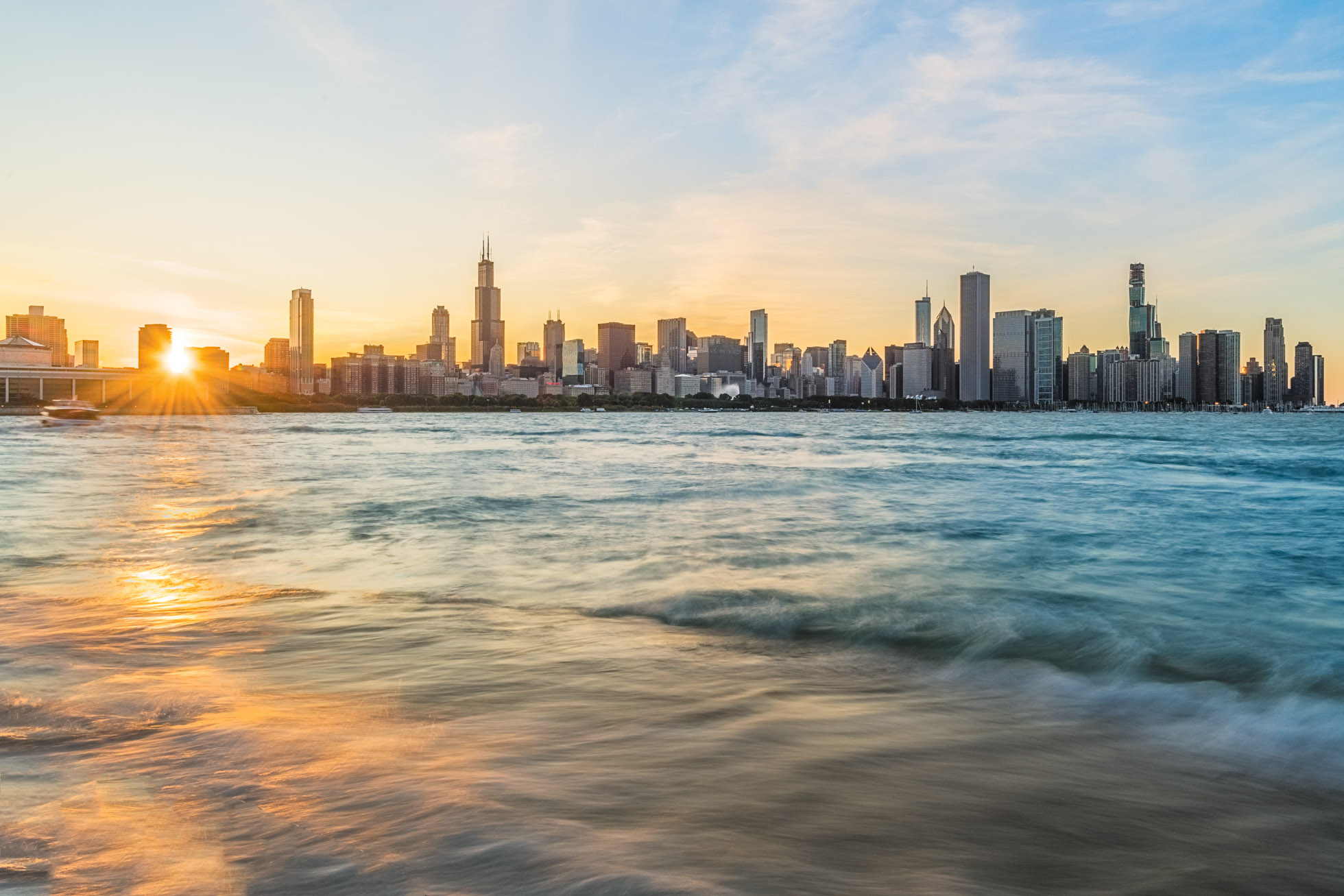
Chicago Skyline on a windy and wavy day. Captured with a 1/320 shutter speed.
1) Fast Shutter Speed - The image above was captured on a very windy day in Chicago and the waves were crashing hard along the pavement below the steps outside Adler Planetarium. The fast shutter speed freezes the motion of the waves and shows the texture of the water. This exposure choice allows the viewer to see the rough water and feel the mood of the scene captured.

1 second exposure of the rough waves on a windy day in Chicago!
2) Slow shutter speed in the .4 second to 3 second range. This choice of exposure does not freeze the motion of the water and creates a smoother effect than a fast shutter speed. The blur of the movement still maintains some texture in the water and shape in the waves. This choice also maintains a bit of the actual mood of the windy and wavy scene but also adds a creative effect. A shutter speed in this range will typically require the use of a Neutral Density filter unless shot in very low light. This image was captured using a 6 stop Neutral Density filter.

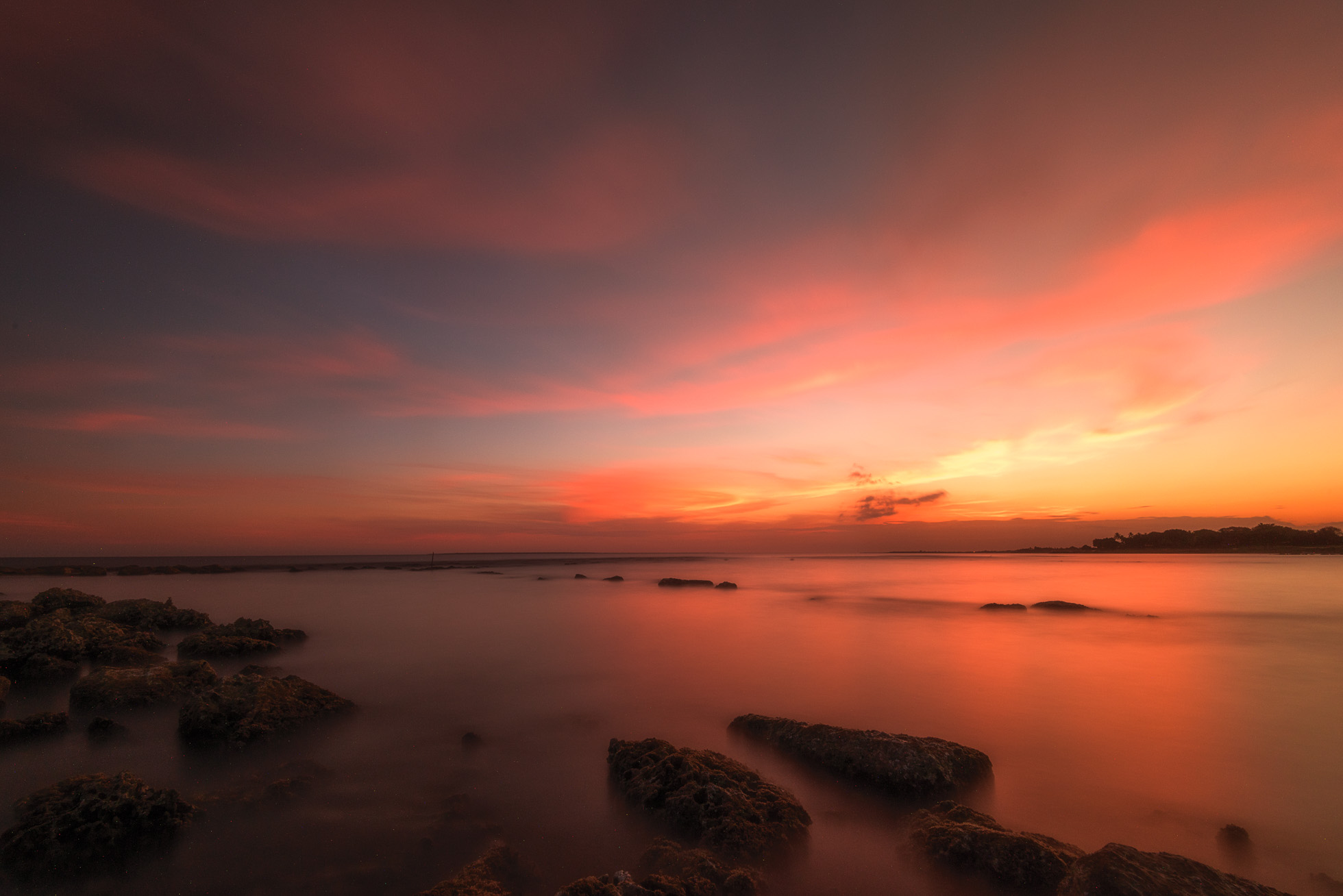
60 second exposure after the sun dipped below the horizon
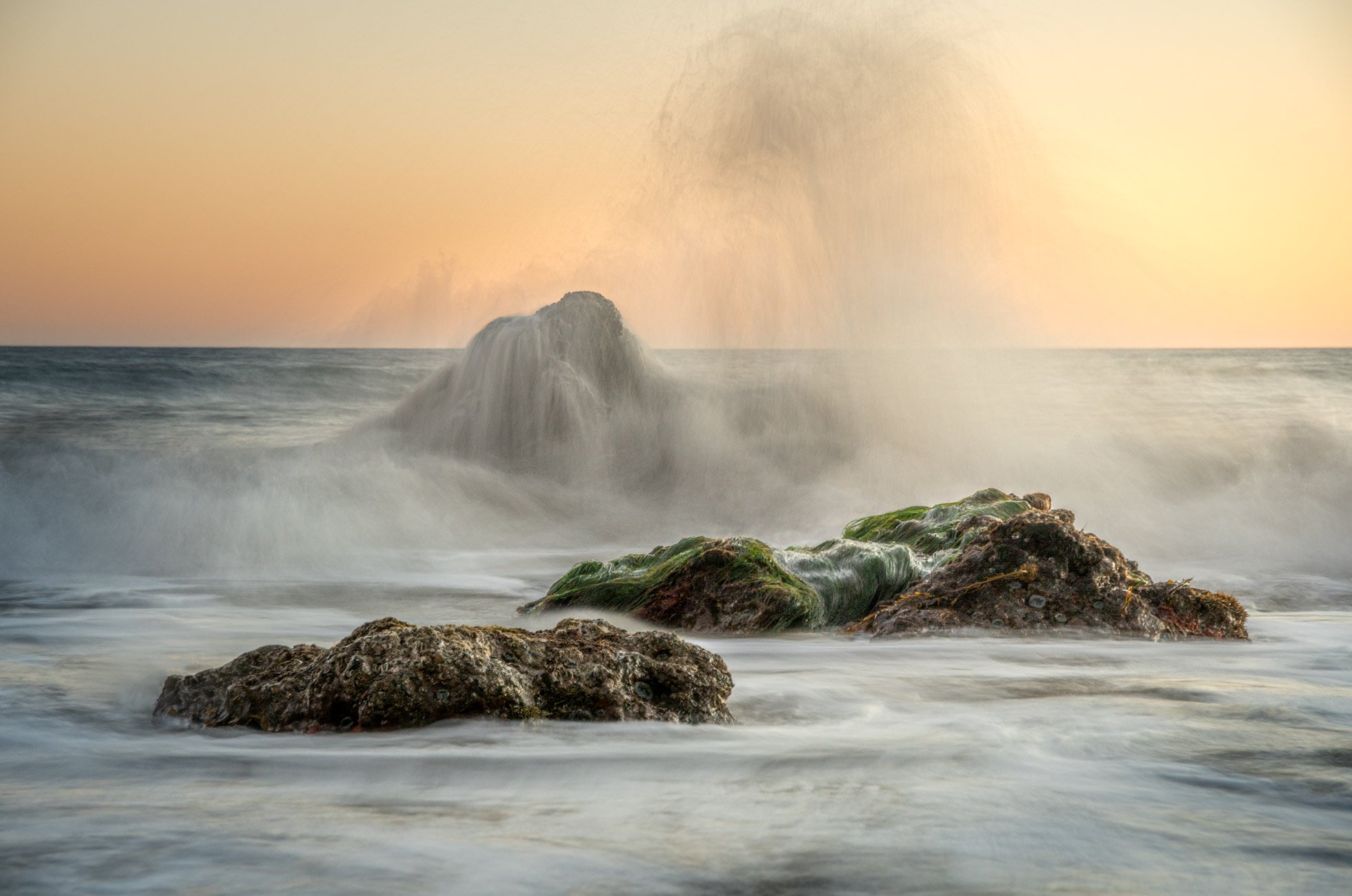
3) Long Exposure 5 seconds or more. These exposure times will smooth out the movement of the water and the longer exposures (15 seconds+) will create a dreamy and serene feel in the image. This moment felt very serene standing on the shores of Lake Michigan watching the beautiful sunset colors light up the sky. While the image does not show the rough waters that existed, it does represent my mood as I captured the scene. Sometimes creative exposures capture how we feel even if the scene appeared a bit different in reality.
Longer exposures in the range of 5 seconds to minutes require the use of a Neutral Density filter except when shooting in the dark. This 60 second exposure also used a 6 stop Neutral Density filter. Quite often, exposures of this length will need a 10 stop ND filter.
If you are looking for filters, I highly recommend Maven Filters. *
Kristen Ryan is a landscape and fine art photographer residing in the Midwest suburbs of Chicago. All images can be purchased in the Fine Art Store. Kristen leads ladies landscape photography retreats in the Tetons, Chicago, and the Canadian Rockies, offers private mentoring and teaches an online landscape photography workshop twice a year.
*Affiliate Link
7 Tips for a Great Sunburst
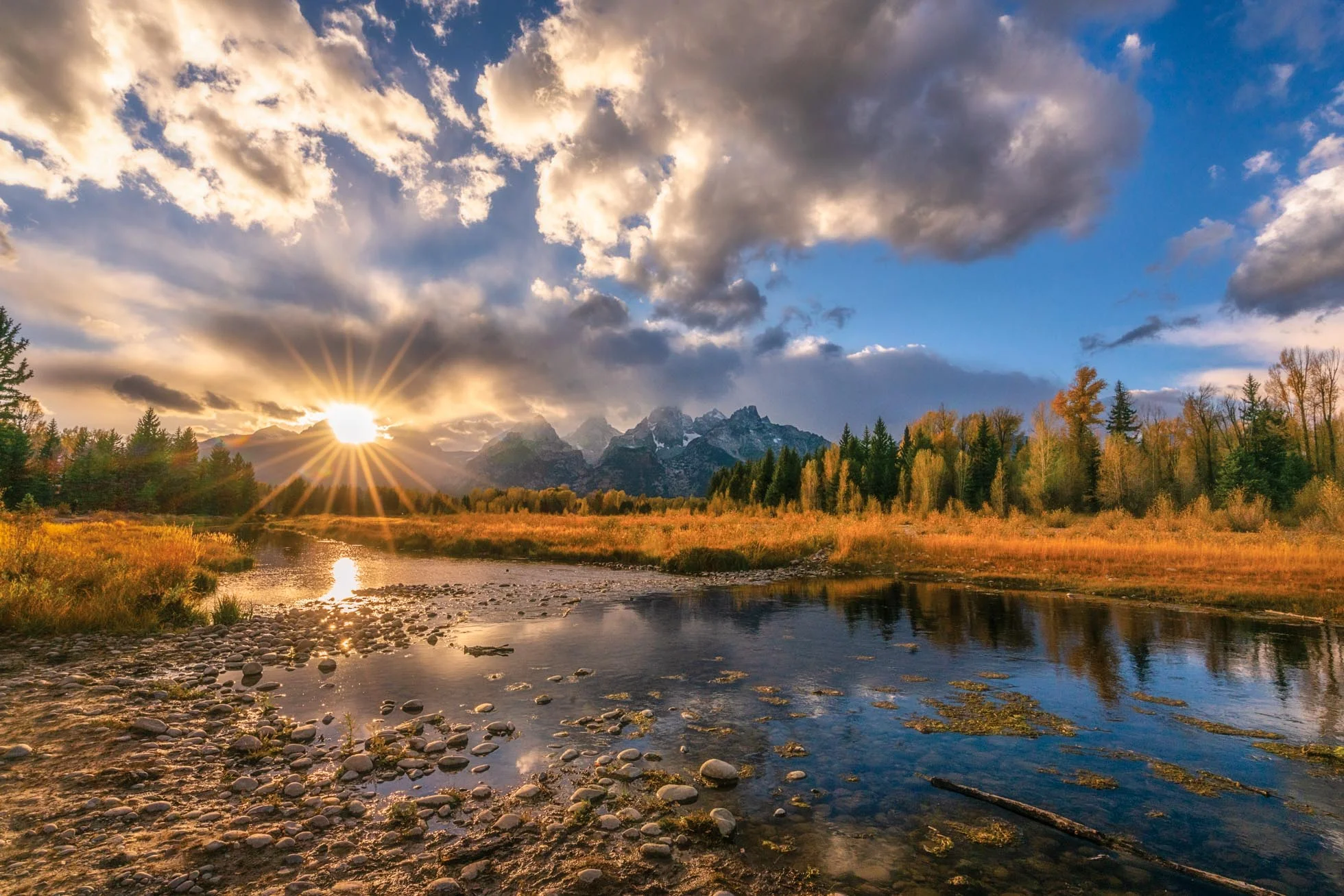
One of my very favorite techniques for adding drama and impact to landscape images is creating a sunburst when the sun is in the frame. Sunbursts introduce added interest to any frame and are especially fun to add in when you have a completely clear sky.
A starburst of the sun happens as a result of diffraction. Light goes into the small opening of a narrow aperture of our camera and is then bent around the edges of the blades. This disperses the light rays into a starburst.

Here are some tips and thoughts to think about as you capture sunbursts in your shooting!
1) Choose A Wide Angle Lens - Wider focal lengths will produce more rays in the starburst so your best bet will be a focal length in the 14-35mm range. This is not to say you cannot capture a sunburst with a longer lens, but the wider angles are ideal. Keep in mind that regardless of focal length, different lenses create different looking sunbursts. For example, my Nikon 14-24mm lens produces a bit of a circular flare starburst at 14mm (image below) which is different from my Nikon 16-35mm lens at 16mm. (image above) Experiment with your lenses and focal lengths to see which one produces your favorite burst!

2) Close Down Your Aperture - Closing down the aperture will produce more distinctive rays in the sunburst. It is possible to get a sunburst with an aperture wider than f/16 but f/16 or f/18 are my top choices for a great sunburst.
3) Sky Matters - The best conditions for a good sunburst will be a patch of clear sky for a bright and sharp sunburst! Trying to create a starburst through a thin layer of hazy clouds is like banging your head against a wall. When the sky has some thicker clouds amongst clear sky, when the sun hits the clouds, this can create nice potential for a burst of rays into the sky and over the clouds.
4) Consider the Position of the Sun - When the sun is in the middle of a clear blue sky, a nice sunburst can be achieved. Other times, the best sunbursts are created as the sun hits another object, such as a mountain top, horizon, building, tree, etc. This helps the rays to disperse over the object the sun is hitting. This can require patience waiting for the sun to rise or set to the position desired. And sometimes it can require a little movement on your part to line things up.


When shooting sunbursts through trees, even slight shifts in position can help create a better or more distinct sunburst.
5) Expose for the Highlights - One of the keys to getting a great sunburst with distinct rays is to be sure that the highlights are well contained. Ideally, it is best to avoid blowing any of the sun highlights except for the circle of the sun. Exposing for the bright sun does mean that the overall image is somewhat underexposed and the shadows will be quite dark.
6) Bracket Exposures - Following #5’s tip for exposing for the highlights to get a great sunburst, consider bracketing your exposures and also taking an image exposed for the shadows and one for the midtones. Then combine them in post processing so you have detail in the full tonal range of the scene. You can bracket manually or program the camera to automatically take several images at different exposures.

7) Consider Your Position - As mentioned in tip #4, both the position of the sun and your position matter for creating a strong sunburst. Another thing that is impacted by your position is additional flare. Shooting into the sun can bring creative and desirable flare but it can also create unwanted and distracting flare. Look for this unwanted flare as you shoot and in your test shots and consider shifting your position. Sometimes minor adjustments in your position can remove unwanted flare or position it better in the frame where it is less distracting or more easily cloned out. A lens hood can also be a useful tool to avoid unwanted flare. Though sometimes nothing avoids it completely.

Kristen Ryan is a landscape and fine art photographer residing in the Midwest suburbs of Chicago. All images can be purchased in the Fine Art Store. Kristen leads ladies landscape photography retreats in the Tetons, Chicago, and the Canadian Rockies, offers private mentoring and teaches an online landscape photography workshop twice a year.
9 More Tips for Astrophotography (Part 2)
My last blog post, toward the end of June, shared tips for Astrophotography. Summer travel and family life occupied all my time in the last month and a half, but as promised, here is part 2 with 9 more tips for shooting those starry night skies!
1) Check the Moon Phase calendar when planning your Astrophotography. The less moonlight, the more stars you will see and the brighter the Milky Way will be. New Moon will be the darkest time of the month. This is when there is no moonlight at all. During other moon phases, you may still be able to shoot the stars and Milky Way without moon interference, but you’ll need to check the moonrise and moonset times. I love to use the Sun Surveyor app to find out the moon phase plus rise and set times. Sun Surveyor also gives the times the Milky Way core will rise and set and when it is visible without moon interference in your location. I highly recommend checking out this helpful app.
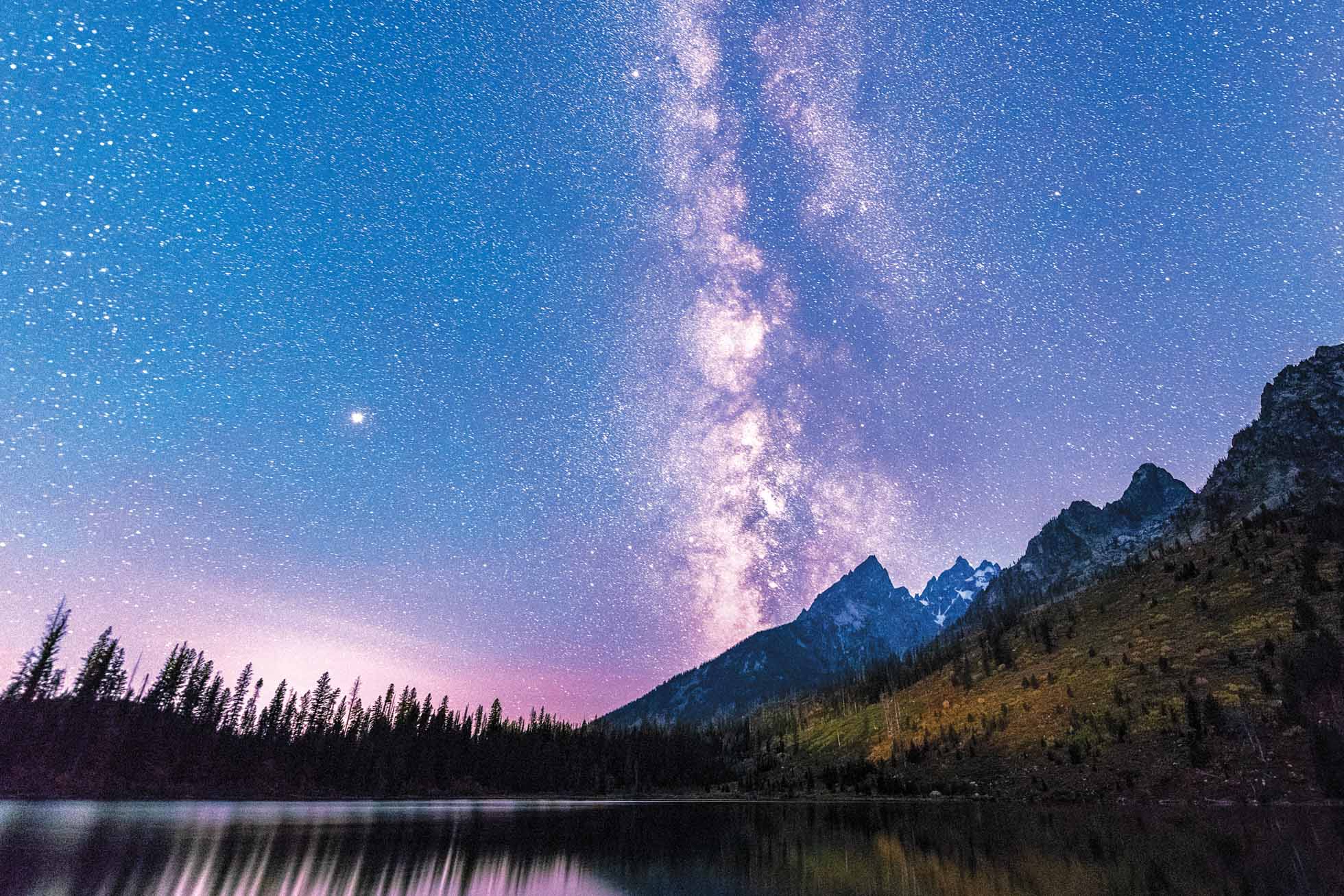
2) Use an app like Photopills to plan your Milky Way shooting. Photopills will help you to find out where the Milky Way will be located at any time in any location. At home or away, you can put the pin on any location and see where the Milky Way will be at midnight, 1:00 a.m, 3:00 a.m., etc. For this June’s Teton Retreat, I had our 2:00 a.m. String Lake Milky Way shoot planned when I chose the dates of the retreat knowing the Milky Way would be in the ideal position from 2:00-3:00 a.m. Using an app such as Photopills allows you to know what to expect and plan for success.

Milky Way over the Grand Teton at String Lake in June 2019 at the Magic in the Tetons Retreat
3) Get To Know Your Gear In The Dark - The very dark skies are great for capturing millions of stars, but this also means you can’t see your gear without a flashlight. If you are shooting with a friend or a group, turning on flashlights can ruin the exposures of your fellow photographers. Being able to put your camera on your tripod in the dark, adjust your tripod and check your LCD without turning on your flashlight is extremely helpful. Additionally, the longer you keep lights off, the more your eyes adjust to the dark.
4) Watch Your Histogram & Expose To The Right - In evaluating your exposure, check your histogram rather than relying on your LCD screen. Exposing as bright as you can without blowing the highlights will produce the best quality image with the least noise. Noise is inevitable in the dark conditions with high ISO. The better exposure you have, the less noise there will be. Check to see that your histogram is as far toward the right as it can be without it climbing up the right wall. There will be more tones toward the left because it is so dark, but keeping them as far as possible off the left wall of the histogram will capture a better quality image.
5) Consider Foreground Exposure - The foreground of your scene will be much darker than the sky full of stars. There are a couple options for getting a well exposed foreground image to composite with a great exposure of the sky. The first is to get out before the sun sets and capture the frame you want with a well exposed foreground before sunset or during blue hour when a little more light will light the scene. Be sure to choose your composition and leave the frame and focus where it is before shooting the night sky. The second option depending on the foreground scene is to light the foreground with a flashlight or headlamp. The foreground will need to be close enough, and your light strong enough, to be lit with your supplemental light source. Light painting must also be allowed where you are shooting. Grand Teton National Park, for example, does not allow light painting so during my retreats we do not light the foreground. The third option, if you arrive in the dark, is to take a brighter exposure of the foreground to composite with the sky by taking a longer exposure. This will create star trails in the sky, but you can composite your longer foreground exposure with your static star exposure in Photoshop.

A starry evening at the Three Sisters in Canmore, Alberta Canada
6) Consider Stacking to Reduce Noise - One technique to try for less noise in astrophotography is taking multiple exposures of the same frame and stacking them in a program called Starry Landscape Stacker. This program is very easy to use and stacks multiple exposures of the sky into one by lining up the sky. The resulting image has less noise than editing one single exposure. For example, you can capture 10 exposures at ISO 6400, f/2.8, 15 seconds and stack them in Starry Landscape Stacker. The program is $40 but very worth it!
7) Consider Composition - Just as with landscape images, composition matters in astrophotography too. It can be easier to find a pleasing composition in the daylight, so it can be helpful to scout out a location ahead of time, or get there before dark as mentioned above in the Foreground Exposure tip. Even in daylight, you can use your Photopills app to see where the Milky Way will be in the Night AR part of the app so if you will be shooting the Milky Way, you can think about composition ahead of time. Consider where other aspects of the scene may be comfortably placed in the frame and how you can create balance between the left and right sides of the frame as well as the top and bottom.
8) Look for Interesting Foreground - As you consider composition, look for a location that will have interesting foreground to be part of the scene. Mountain peaks, rock formations, barns, trees, and oceans all are examples of foreground spaces that will add impact to your night sky images.
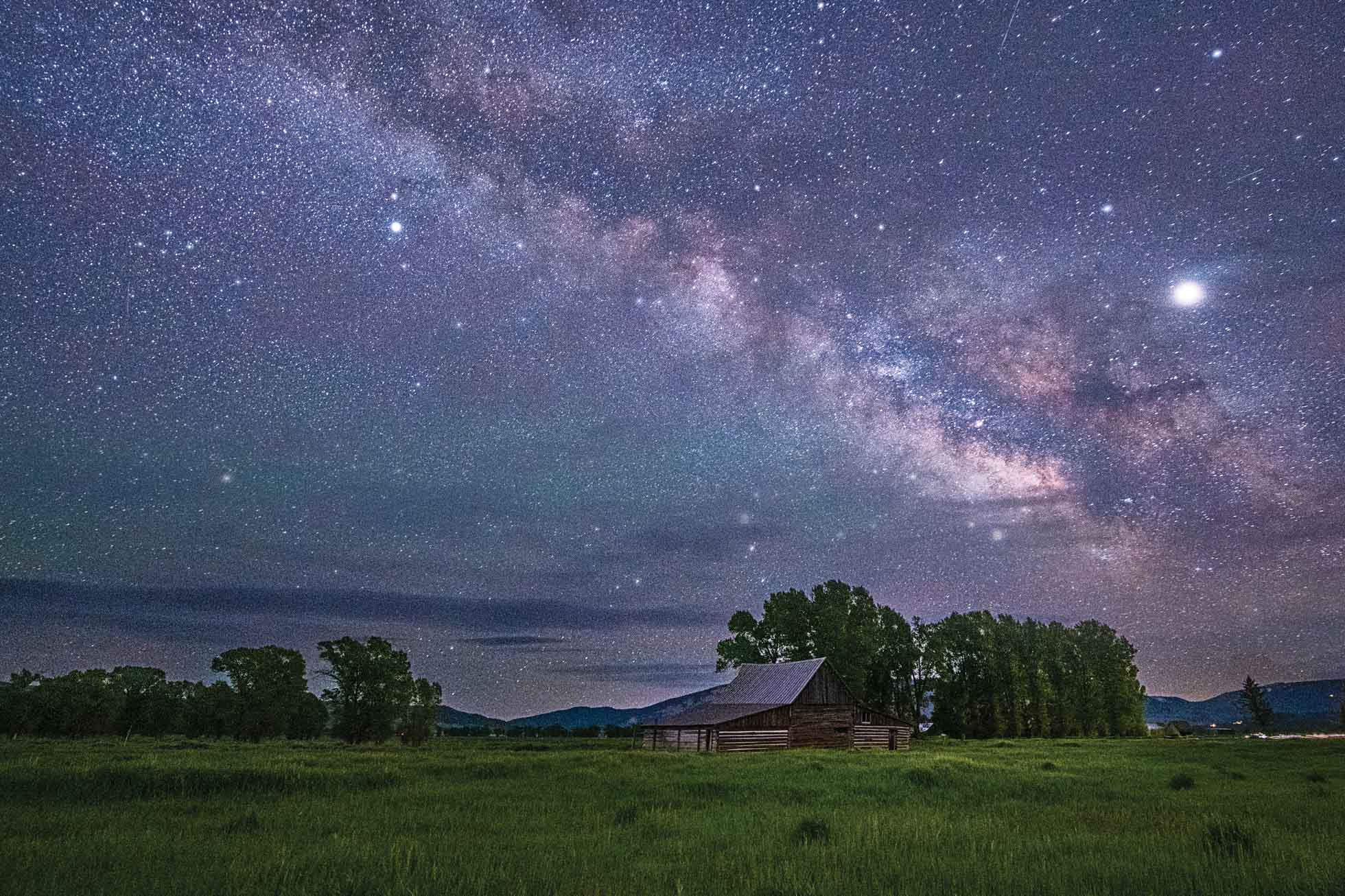
Milky Way over the Moulton Barn in Jackson Hole, Wyoming at the June 2019 Magic in the Tetons Retreat
9) Pack Extra Batteries - A final gear recommendation for shooting astrophotography is to make sure to have at least 1 or 2 extra batteries. With (often) cooler temperatures and long exposures, batteries drain more quickly and it is disappointing to be capturing amazing images only to be thwarted by a dead camera battery! Make sure to head out prepared.
It can be challenging to get out to shoot at night, especially when it means giving up your sleep, but I promise it is worth it when you see the Milky Way on the LCD, or even just some beautiful stars!
Kristen Ryan is a landscape and fine art photographer residing in the Midwest suburbs of Chicago. All images can be purchased in the Fine Art Store. Kristen leads ladies landscape photography retreats in the Tetons, Chicago, and the Canadian Rockies, offers private mentoring and teaches an online landscape photography workshop twice a year.
9 Tips for Astrophotography - Part 1
Astrophotography has quickly become one of my very favorite genres of photography. There is something mesmerizing about the night sky and it is incredible the way the camera captures the night in ways that our naked eye cannot see. Being out in the dark under the vast night sky is exhilarating and it is even more so when you see what your camera can capture. That said, it can be a bit nerve-racking being out in the dark and a bit overwhelming trying to figure out the best techniques to capture it well.
Today I’m sharing Part 1 of two blogs posts with tips on capturing the night sky.
1. A Tripod Is Essential - Ambient light at night is extremely low and in order to capture the scene, a slow shutter speed will be necessary. A tripod is required to keep your camera steady throughout the long exposure. Choose one that is sturdy and comfortable for you to use. This will be essential working with it in the dark.
2. Use a remote shutter - Triggering the shutter with a remote will take away the chance that manually pressing the shutter will create movement and reduce sharpness of the image. An intervalometer will also be useful for programming if you want to try shooting star trails.

3. Shoot in RAW - Shooting in RAW will give you more ability to work with the exposure and white balance in post processing than a JPEG. It is always best to get exposure and white balance correct in camera but shooting in RAW maintains all the information from your file so you can work more creatively while editing.
4. Choose a wide angle lens - The night sky is vast and a wide angle lens will allow you to capture a much larger expanse. A 24mm lens or wider is ideal for astrophotography. My two favorite lenses for astrophotography are my Sigma 14mm f/1.8 and my Nikon 14-24mm f/2.8.
5. Shoot in Manual Focus - In the extreme low light, your camera cannot autofocus so you must focus manually. Make sure you have your camera and lens set to manual focus so that your shutter doesn’t try to focus once you have achieved a sharp frame. Focusing is the trickiest part of astrophotography. A few options for finding focus in the dark are 1) Get to your location earlier in the evening and find your composition and focus and stay there until dark without changing your setting. 2) Find where your lens focuses at infinity and remember it so you can manually set focus. Keep in mind that zoom lenses will not focus in the same spot relative to the infinity symbol for all the focal lengths in the range. 3) Use a very bright flashlight or car headlights to focus on an area as far from you as possible to set focus. After setting focus and taking a test shot, zoom in and check your focus. If it is not quite sharp, manually tweak the focus just slightly left or right until you get it in sharp focus. Once you get focus, leave it!

6. Use a wide & fast aperture - Ideally the wide angle lens you are using will be able to open wide to f/2.8 or wider. This will allow you to let in as much light as you can in the dark shooting conditions. Because the sky is so far away, the stars will still be in focus with a wide aperture.
7. Choosing a Shutter Speed - For static stars, you want to choose a shutter speed that gives you sharp pinpoint stars. At longer shutter speeds, the stars begin to look like trails in the sky. If this is your vision, you can play with various shutter speeds for creative effect. For static stars, you can start with the 500 rule which says to take 500 divided by the focal length to give you the maximum shutter speed. So for 24mm, 500/24 = 20. 20 seconds would be the longest exposure time you can choose before your stars begin to trail. I generally find 15-20 seconds is the ideal range. If you are shooting on a crop sensor, take your focal length and multiply it by 1.5 to get the full frame equivalent and then do your 500 rule division. So a 16mm lens on a crop X 1.5 = 24. Then 500/24 = 20 seconds.
8. Set your White Balance on ‘Daylight” - The Daylight white balance setting, or around 5500 Kelvin, is a good starting point for your white balance. If it looks too warm at that setting, adjust from there. If you are shooting in RAW, you will also have the ability to tweak it in post processing.
9. Look for Dark & Clear Skies - Ideally, a very clear night will be your best bet for capturing the stars in the night sky. Dark skies without a lot of light pollution will also reveal the most stars. A few wispy clouds in the sky can also be beautiful though, so don’t get discouraged if it isn’t 100% clear. Also, some clouds move through the sky more quickly than others. More about dark skies and planning coming in Part 2.

10. Be safe and bring a buddy with you! The most important thing is always to be safe and make wise choices. The darkness prevents us from easily seeing what is around us and dark skies are often found in the middle of nature where you always should be prepared for the unexpected. It’s always smart to shoot with a buddy or bring a friend with you to keep you company. Safety is always more important that any images.
Look for “Tips for Astrophotography” part 2 coming up in the next couple weeks!
Kristen Ryan is a landscape and fine art photographer residing in the Midwest suburbs of Chicago. All images can be purchased in the Fine Art Store. Kristen leads ladies landscape photography retreats in the Tetons, Chicago, and the Canadian Rockies, offers private mentoring and teaches an online landscape photography workshop twice a year.
8 Tips for Landscape Photography on Family Vacations
If school isn’t out where you live, then it is likely starting to wrap up! Summer is finally here and this is a popular time for family vacations. Long, carefree days and so many options for travel in weather that encourages outdoor activities.
One question I am often asked is how I am able to capture landscapes when traveling with my family. So I thought I’d share some of my thoughts and tips as summer vacation preparation is upon us!

1. Have Realistic Expectations! A family vacation is just that, a ‘family vacation’ not a ‘photography vacation’. On a photography trip, we can chase the light to our heart’s content and make that the number one priority. On a FAMILY vacation, our loved ones and our family experience is the top priority. If you have a love for landscape photography like I do, I do not think it is unrealistic to take a little time for yourself to shoot and fulfill the creative need, just like a runner is filled up by a daily run. And if you are traveling somewhere beautiful, you will want to capture some of those scenes. But you won’t get every sunrise, sunset and top photographic location. I come home with images I love, and many in good light, but I do not explore in the way I would on a photography trip. Going into the trip with unrealistic ideas just creates disappointment and that is not what you want for your experience with the people you love.
2. Ask Locals for Tips and/or Research Top Photo Ops - Before you go, research your destination’s top photographic spots! If you are visiting for a short time, you will want to know the hot spots ahead of time. Choose the ones that are reasonable to get to for sunrise or some that would be fun for the family to explore. In addition to Google, ask some locals for tips. This may be local photographers or even hotel or restaurant employees.

3. Get Up For Sunrise - This is one of my top tips! Sunrise is one of the most beautiful and peaceful times of day. Even when I visit a very populated location, sunrise not only has some of the best light of the day, but it also is a time I can experience the beauty of nature with the fewest other people around, often completely by myself. My family also likes to sleep in so I am able to sneak out for an hour or two in the morning before they are ready for the day. I get my landscape fix and start the day in a positive way without my photography taking away from family time.

4. Scout locations While Exploring during the Daytime - As you and your family explore, consider if any of the locations would be great spots to come back to for sunrise or sunset (if opportunity allows). Always look for spectacular views, interesting lines, foreground and framing elements.
5. Include Your People in the Frame - Landscapes are not always void of people and quite often including a human element in the frame can enhance the strength and impact of your image. The human element can create a great sense of scale and a stronger story. Including your own loved ones in your images adds more meaning and sense of experience for you as well.

6. Keep Your Camera With You Often - When it is convenient and makes sense, keep your camera with a versatile lens (24-70, or 24-105 would be my top picks) around your neck during your exploring so you can capture those special moments or gorgeous views as you come upon them. Unless you are shooting long exposures or in low light, a tripod isn’t necessary to capture gorgeous images and memories.
7. Get in the Frame - This tip is not necessarily landscape related, though could be. Adding yourself into the landscape is also a great way to add impact to your images. But take the opportunity to set your camera on a tripod and capture yourself with your family. You’ll never regret doing it, but you very well may regret it if you don’t.

My handsome husband and I in Oahu
8. Let it Go & Enjoy! - Sometimes it is just best to put the camera down and enjoy your family and the experience. The creative process can take a lot of energy at times, and sometimes it is just best to let it go and give all that energy to just enjoying your loved ones. It is just an image after all. The people in your life are worth so much more.

My four favorite little people
BONUS TIP #9: Plan a trip FOR your photography! Sign up for a workshop or retreat or plan a trip for yourself where you can go and make chasing the light and top locations your number one priority. Gifting yourself this opportunity is truly invaluable. And when you know you will get this dedicated creative time, it is easier to miss out on opportunities when you travel with non-photographers.
Where will you be traveling this summer? I’d love to hear about it in the comments :)
Kristen Ryan is a landscape and fine art photographer residing in the Midwest suburbs of Chicago. All images can be purchased in the Fine Art Store. Kristen leads ladies landscape photography retreats in the Tetons, Chicago, and the Canadian Rockies, offers private mentoring and teaches an online landscape photography workshop twice a year.


Best Lenses for Landscape Photography
Are you wondering what lens is the best choice for landscape photography? I often get asked by my online students and retreat attendees what lens is best for landscape photography and which lens is my favorite. The simple answer is that my favorite lens/focal length is the one that best captures my vision of the image I am seeing in the moment.
The more in depth answer is that there really isn’t a SINGLE best lens for landscapes. It depends very much on the particular location. Sometimes you may need an ultra wide angle to get the entire scene in the frame or the sky is so amazing you want to include as much of it as you can. Other times, you want to hone in on a smaller portion of the scene; just the part that is grabbing your eye. And sometimes you really need reach to grab detail that you cannot get with anything other than a telephoto.
So, what’s the best lens? There isn’t ONE. However, I will give you some thoughts and examples of the several lenses I use and then you can see how these lenses would help you in the areas you photograph.
First off though….zoom or primes? Prime lenses are sharp and fast and will capture high quality images. However, as a photographer with a landscape focus, I am partial to zoom lenses in most circumstances. The reason being that it is not as easy to just ‘move your feet’ to get a different angle in most cases. I often need to zoom ‘out’ or zoom ‘in’ to change the frame. This also allows me to set up on a tripod and get various compositions from one location.
Ultra wide angle
I shoot with both the Nikon 14-24mm, the Nikon 16-35mm, and the Sigma 14mm f/1.8. I also have a 16-35mm for my Sony a7rii. All are fantastic lenses and I know from friends that the Canon 16-35mm f/2.8 is also an amazing lens.
These focal lengths will allow you to really showcase the expanse of the world. Imagine an endless sky, spanning view of mountains, or endless stars at night. The ultra wide angle is your best friend in these situations. If you love sunbursts, a wide angle lens will also give you the most amazing sunbursts!
The ultra wide angle is often my favorite. I love taking in the wide expanse of the world and very often, only the widest angles will truly capture that magic.

16mm was necessary to capture this wide scene of the Chicago Skyline to include the golden morning sunlight shining in from the left.

14mm is my favorite focal length for capturing the night sky. The ultra wide focal length captures the vast sky of stars in addition to the foreground scenery.

16mm captures the entire sunset scene in the Tetons, including a vivid and distinct sunburst.

16mm allowed me to include significant foreground and ocean in addition to the beautiful sunrise sky.
But, I could not capture the variety that I do with only these widest angles.
Mid Range
I love my Nikon f24-70 f/2.8. If you could only buy or travel with ONE lens, I’d probably say to choose a 24-70 or 24-105 (which I don’t own but there are some great lenses out there in this focal length range)
The 24-70 (or 24-105) gives you a nice wide angle in the 24-35mm range but also allows you to zoom in a bit and grab some closer details. If I am hiking, for example, and want to only carry a camera without extra gear, this is often the lens I will grab. It is so versatile. This mid range gives you a very realistic view of the world’s scenery.
Some examples in this focal range.

48mm focused this frame between the trees. A wider focal length would have added distraction outside of the framed focal point of the waves.

60mm brings me closer to Mt. Moran in this sunrise scene and creating nice symmetry between the mountains and their reflection.

70mm captures the birds and sun rays as the clear main subject of the frame while including the environment around them.

70mm brings the frame closer to the mountains and makes them a more prominent part of the frame than a wide angle
Telephoto
I own both the Nikon 70-200mm and the Sigma 150-600mm. I bought the Sigma more for wildlife and sports, but I also use it for some detailed landscapes.
Focal lengths in the 100+ range allow you to capture details of the landscape that you cannot get close enough to with the wider angles. Such as zooming in on a single mountain in a range, shooting across a body of water, or isolating certain details in a scene.

200mm
The week after Halloween, we got our first big snow. It just so happened I had just been out to the Arboretum the prior week photographing peak fall color. So after the snowfall, I drove through and spotted this incredible scene of seasons colliding. 200mm with my 70-200mm lens allowed me to highlight the detail of these two trees next to each other by filling the frame with the contrast of fall color and snowy branches.

175mm
I used my 70-20mm at 175mm here to isolate the crashing waves in the ocean of the coast of Oahu.

150mm
As the sunset’s golden light hit the Grand Teton, I captured this at 150mm to isolate the light on the Grand complimented by the colorful autumn foliage in the foreground.

550mm
While capturing the sunrise at Oxbow Bend, I noticed the way the light was hitting this beautiful golden tree across the water. I put on my Sigma 150-600mm to isolate the tree against the background of low clouds.
As you can see from the examples above, the best lens & focal length is the one that best captures the beauty speaking to you in that moment. Sometimes it is a wide angle, but other times you need a long focal length to isolate the beauty in the distance.
Hope these examples and thoughts help you to capture all the beauty in front of you at home and in your travels.
Kristen Ryan is a landscape and fine art photographer residing in the Midwest suburbs of Chicago. All images can be purchased in the Fine Art Store. Kristen leads ladies landscape photography retreats in the Tetons, Chicago, and the Canadian Rockies, offers private mentoring and teaches an online landscape photography workshop twice a year.
4 Ingredients to Impactful Landscape Photography
Sunrise on the North Shore of Oahu, Hawaii
I often reflect on why I spend a lot of my time with landscape photography, both shooting and processing as well as educating others. The reasons why are a topic all their own. But all the time I spend shooting, studying, practicing, educating and encouraging others has made me reflect on what it is that creates stunning landscape photographs. I think about how to take my photographs to that next level and of new ways to teach and encourage others in my retreats and online workshop.
In my mind, it comes down to 4 ingredients. There are exceptions to every rule, of course, but there are 4 ingredients that must come together to create exceptional landscape and nature imagery. Several of which we can control, and one in which we cannot, at least for the most part.
1. CRAFT
The first ingredient in creating amazing landscape images is knowing your craft. And when I say craft, I am referring to the technical settings and techniques involved in mastering your camera and in shooting landscape photography more specifically. It is important to put in the time to learn the basics of photography, including the exposure triangle, white balance, focus and metering modes. Learn how to use filters such as polarizers, graduated neutral density filters and regular neutral density filters. Honing your craft including learning to read your histogram and how to bracket images to capture the entire dynamic range of the scene. Develop an understanding of depth of field and learn to use a tripod and intervalometer with ease. Learn the rule of thirds and other composition elements that will add depth and strength to your frame. Take a class on post processing or study on your own how to use the tools of these programs. This is all about learning the techniques and tools you may need to capture a well exposed and focused image and edit it in Lightroom or Photoshop.
2. VISION
The second ingredient in creating amazing landscape images is vision. Learning the tools and techniques is just half the equation. Beyond understanding the technicals, we have to learn to see in our minds what we want to create with these techniques. The two go hand in hand, as the stronger understanding of the technicals and the more we hone our craft, the stronger and more creative our vision grows. Vision helps us find that unique perspective or puts an artistic polish on the image through post processing. Craft is the skill while vision allows us to express ourselves with that skill. The more we practice the various techniques, in shooting and processing, the more creative possibilities open up to us. We learn to see what we might not have seen before. For me, this vision comes from framing images in my mind as I drive or hike, and from reflecting on past clicks of the shutter that fall short of impressing me. Just like our craft, our vision grows from practice and is integral to creating unique and impactful landscape images.

My vision here called for an 8 minute exposure. Mt. Rundle in Banff National Park. Alberta, Canada
3. OPPORTUNITY
To practice and develop both craft and vision, there must be opportunity. Sometimes these opportunities may fall in your lap and other times you must create opportunities. You have to sacrifice sleep or time with family to get out when the light is good or to travel to a place which inspires you. This can be easier said than done. Unless photography is your full-time job, you may have another job that restricts your time or perhaps you take care of kids full time and getting out or away requires finding childcare. If you live close to incredible scenery, you may have many great opportunities close by. If you don’t, you may have to work a little harder.
The opportunity factor can be a little complicated because in many ways you have control. You can decide (to an extent) where you live but if you are married, you have only some control. You can decide to get up early for sunrise, but you may have kids who have to get to school and your spouse is already off to work, such as my situation. You may love photography but your career is another profession and it demands a lot of your time. You may dream of traveling off to Norway, New Zealand, Bora Bora or Patagonia, and maybe you could, but your 3 young and adoring kids are at home needing care. You may want to go shooting at night in the city or in the middle of nowhere to find dark skies, but venturing out alone as a woman feels scary or unsafe.
It can be challenging to combat the things that work against you, and in some cases you COULD make more opportunities but then other aspects of life may suffer. I feel this often as I long to live near the mountains and to travel to those places like Norway and New Zealand. However, my life is outside Chicago, where my husband’s job supports myself and my 4 kids in a way for which I am so grateful. I steal my opportunities to shoot at sunrise when we travel as a family, though I don’t explore in the same way I would as a photographer. I am finding ways to travel as a landscape photographer but going too far or being gone too long is not something I am comfortable with right now. My creative heart is pulled in one direction but my mama heart is pulled in another. I may not be ‘less’ of a photographer for lacking some of these opportunities, but it means some of the images I dream of are for another day, another season of life perhaps.
The trouble with having (and to some extent choosing) limited opportunities leads me to the fourth ingredient over which we have little to no control….
4. LUCK
The fourth ingredient is luck. And when I say luck I am referring to the luck of Mother Nature. We have absolutely no control over the weather! Where we sometimes, but not always, have a little control is that we can make an effort to go out to shoot when we see an optimistic forecast. You can head out for sunset when the forecast is for partly cloudy or head out to shoot the Milky Way during the New Moon and a clear forecast. But you cannot control when that beautiful puffy cloud filled sky in the afternoon suddenly decides to become clear with no sunset color whatsoever. If you head out to shoot those stars and the clouds come earlier than expected, you cannot just blow them away. If you plan a trip to the mountains in the autumn when it is usually peak color and peak comes the next week, there is nothing you can do about it. You can get up every morning of a vacation, but if you get a week of clear skies, your sunrise will look mostly the same. Only a landscape photographer gets sad to see a weekly forecast of full sun after full sun! There is nothing you can do to change the weather when Mother Nature foils your plans.

When Sunset is Stormy in the Tetons. Grand Teton National Park, Wyoming
There are two things you can do, however. The first is to look for the beauty that IS in front of you, because if you are open to the idea that there is always SOMETHING beautiful to photograph, you can usually find it. It may not be what you were hoping for, but if your mind is open to creativity and possiblities, you might just find it. Maybe the photographs won’t be as epic as what you hoped for, or maybe they will be, just in a different way. If all fails, the other option is to try again another day. Create another opportunity. It may take some time but keep trying, and you will find the jaw dropping sunrises, the star filled skies and the rainbows through the clouds.

Magical morning in Oahu, Hawaii
So hone your craft, let your vision and creativity run wild often, create and seize the opportunities you get! You may find Mother Nature rewards you with what you hope for, or perhaps something else entirely. And when you get drenching rain while your photographer peer gets a gorgeous rainbow, congratulate them on a beautiful capture, knowing yours is out there for another day :)
And lastly, get out for the experience of being in nature. In the end, isn’t that what draws us out there as much as the images? It does for me anyway.
Happy shooting my friends!
Looking for some photography filters to add to your creativity, check out Maven Filters! *
Kristen Ryan is a landscape and fine art photographer residing in the Midwest suburbs of Chicago. All images can be purchased in the Fine Art Store. Kristen leads ladies landscape photography retreats in the Tetons, Chicago, and the Canadian Rockies, offers private mentoring and teaches an online landscape photography workshop twice a year.
*affiliate link

10 More Tips to Improve Your Landscape Photography
Last week I shared 10 Tips to Improve Your Landscape Photography. I hope it gave you a little inspiration to remember next time you head out to shoot! Today I am sharing 10 MORE tips, plus a bonus tip :)
1. Get out often & early - The more you get out to shoot and practice all of the techniques, the more they will become second nature and your workflow will become fluid. Landscape photography has a variety of creative and technical practices that take frequent practice to become second nature. Getting to your location early allows you to take your time in finding your chosen composition and prevents you from feeling rushed as the light changes.

Sunrise in Oahu, Hawaii
2. Know How to Read Your Histogram - Understanding your histogram and how to adjust settings for the best exposure is so critical to capturing the details throughout the dynamic range. My goal is always to capture detail from the bright highlights to the dark shadows. I aim for my histogram to be as far to the right side as possible without it climbing the right wall.
3. Use a shutter release - A shutter remote is one piece of gear I always have with me. When I use a tripod I always use a shutter release. This will enhance the sharpness of your images and is also useful for shooting long exposures and time lapses.

1.3 seconds of wave action at sunrise in Oahu, Hawaii
4. Invest in good filters - Learn about the various types of filters from polarizers, graduated neutral density filters and regular neutral density filters, and invest in good ones. Polarizers help to cut glare and haze and enhance the vibrance of skies. Graduated neutral density filters cut light in part of the frame to allow you to capture more detailing the shadows without blowing out the highlights. And regular neutral density filters will block light so you can shoot longer exposures for creative effect.

Long exposure of the clouds and water utilizing a 10 stop Neutral Density Filter at Lake Louise, Alberta, Canada
5. Scout out locations - Taking the time to scout out locations for good light and compositions will help you maximize your shooting opportunities when you go during sunrise and sunset. Sometimes the best light and color lasts only mere minutes so making sure you have scoped out the best perspective ahead of time will help you be more successful.
6. Check your frame - Pay attention to what is IN your frame AND OUT of your frame. Examine the edges and consider everything that you include and leave out. Both can be equally important to the viewer’s scan path.
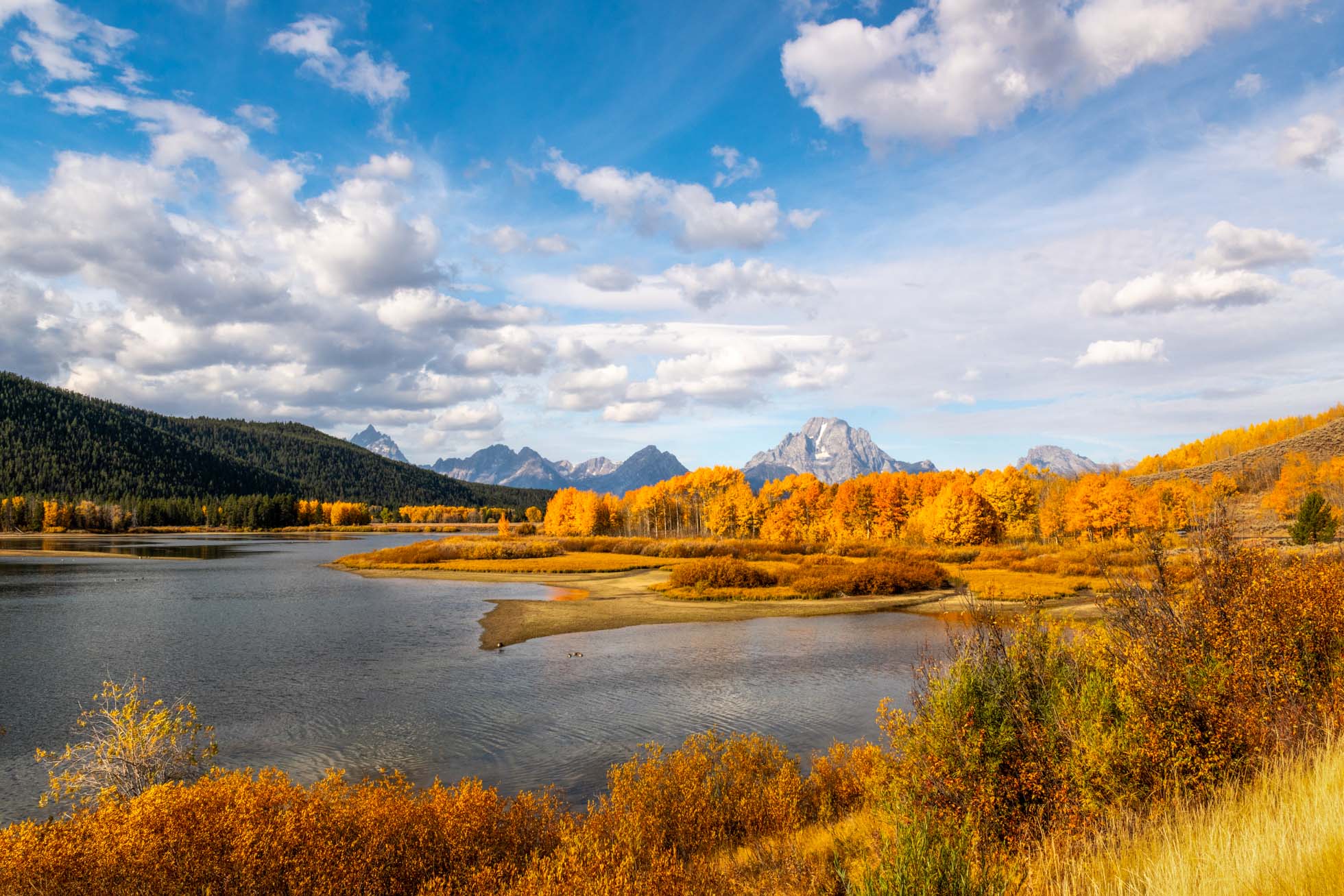
A gorgeous autumn afternoon in Grand Teton National Park
7. Look for leading lines and framing opportunities - Nature has so many lines from trails, shorelines, roads, etc. Use them to lead the viewer’s eye to your main subject. Framing your subject can create depth and impact. I love to look for framing to capture a unique perspective of a frequently photographed location.

Sunrise on a chilly morning on the Chicago Lakefront
8. Less can be more - While many strong landscapes are composed with many elements, sometimes a minimal frame can be just as impactful. Examples of less is more may be an abstract seascape or a simple subject like a tree surrounded by a lot of negative space.

Panning of the Pacific Ocean in Crystal Cove State Park, California
9. Break the rules - There are lots of rules that are rules for a reason, such as using the rule of thirds for composition, not blowing your highlights or clipping your shadows, etc. However, rules are meant to be broken. Know the rules but be willing to break them with intention and creative purpose. For example, not centering your horizon is generally considered a "rule" in landscape photography. But I LOVE a centered horizon

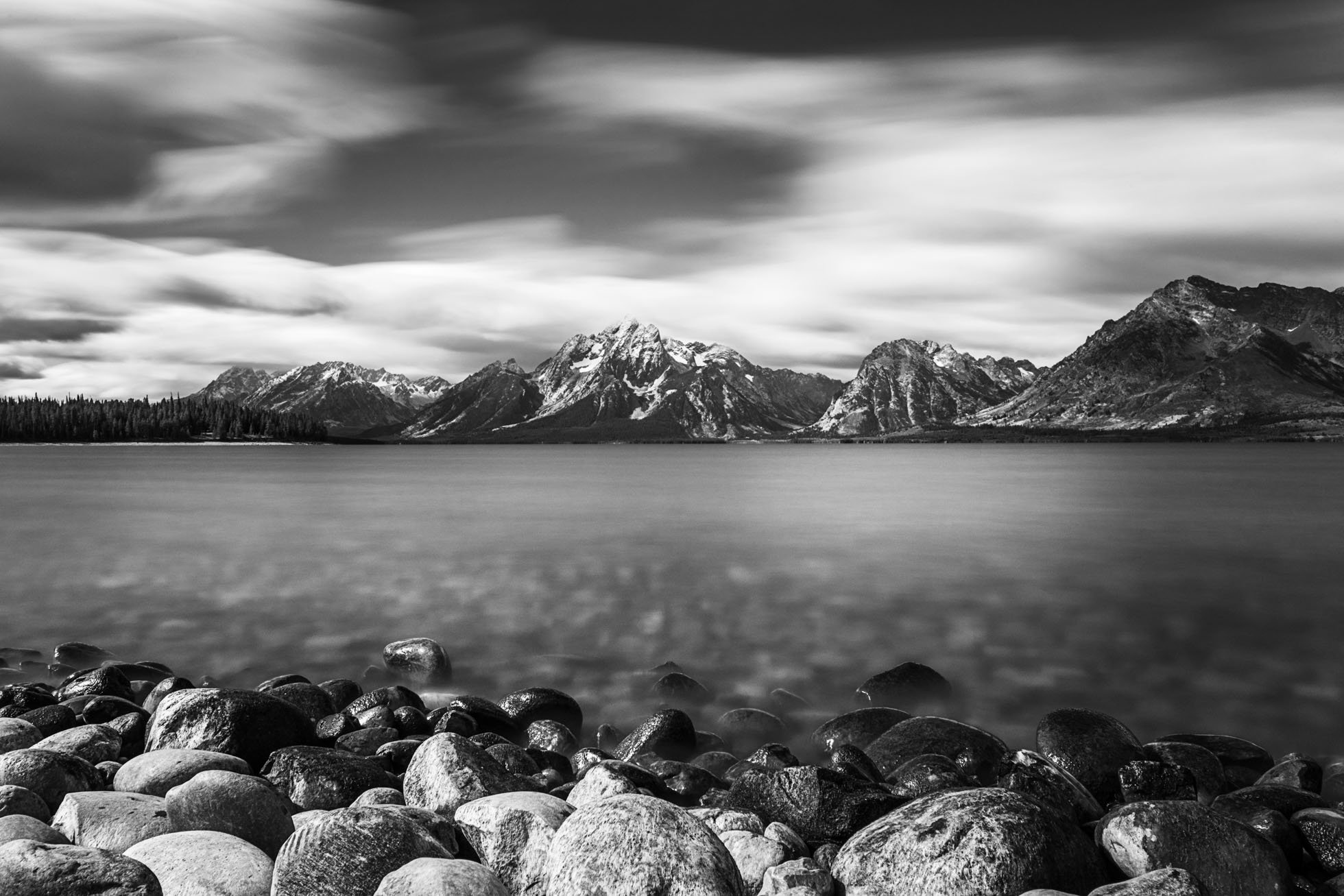
Long Exposure in Grand Teton National Park, Wyoming
10. Maximize foreground interest - Foreground elements are one of the best ways to create depth in your landscape images. Rocks, shells, grasses, flowers, etc. are all great examples of foreground elements. Consider the placement and type of foreground and be intentional. Foreground should add to the frame and lead the eye to the main focal point rather than distract.
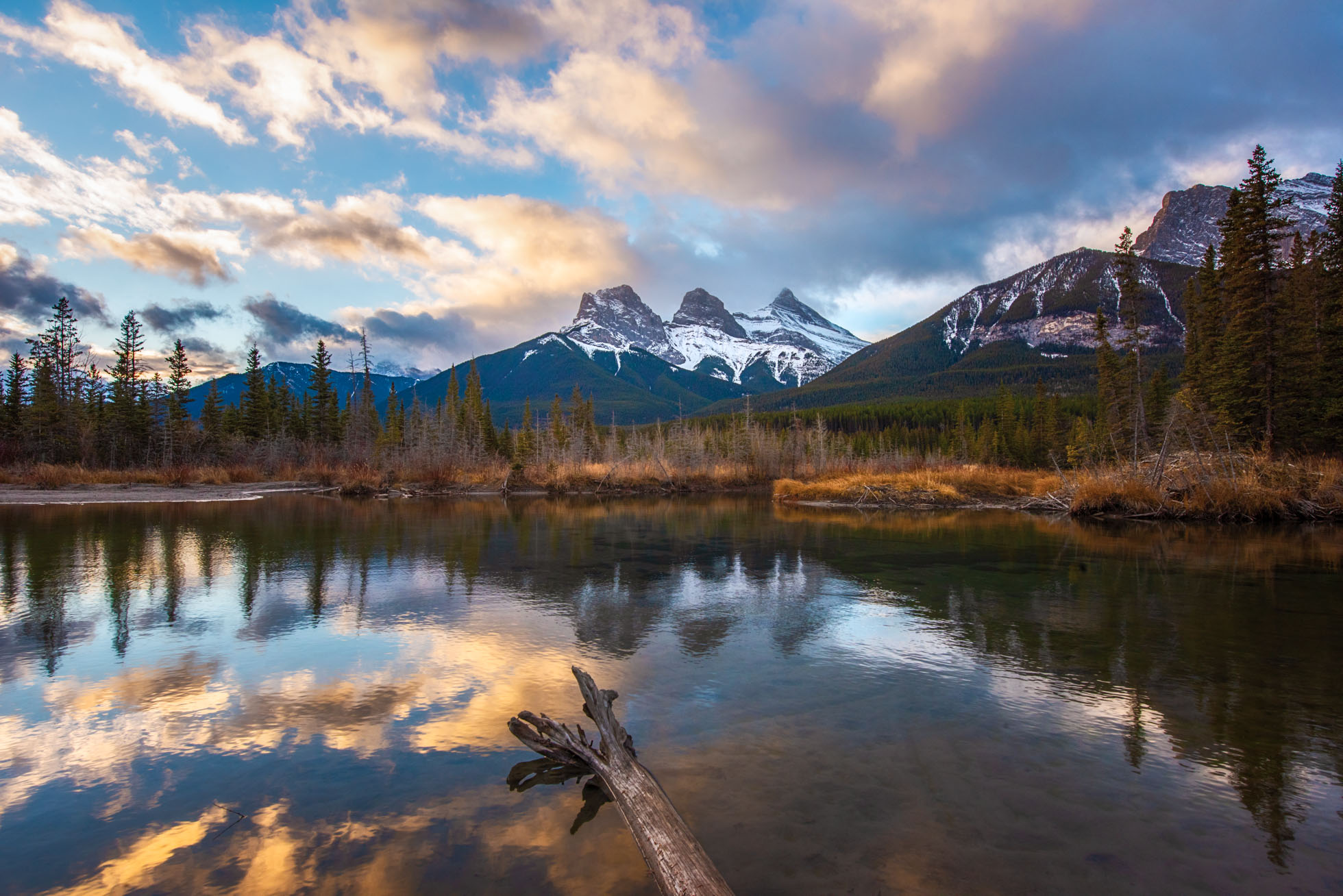
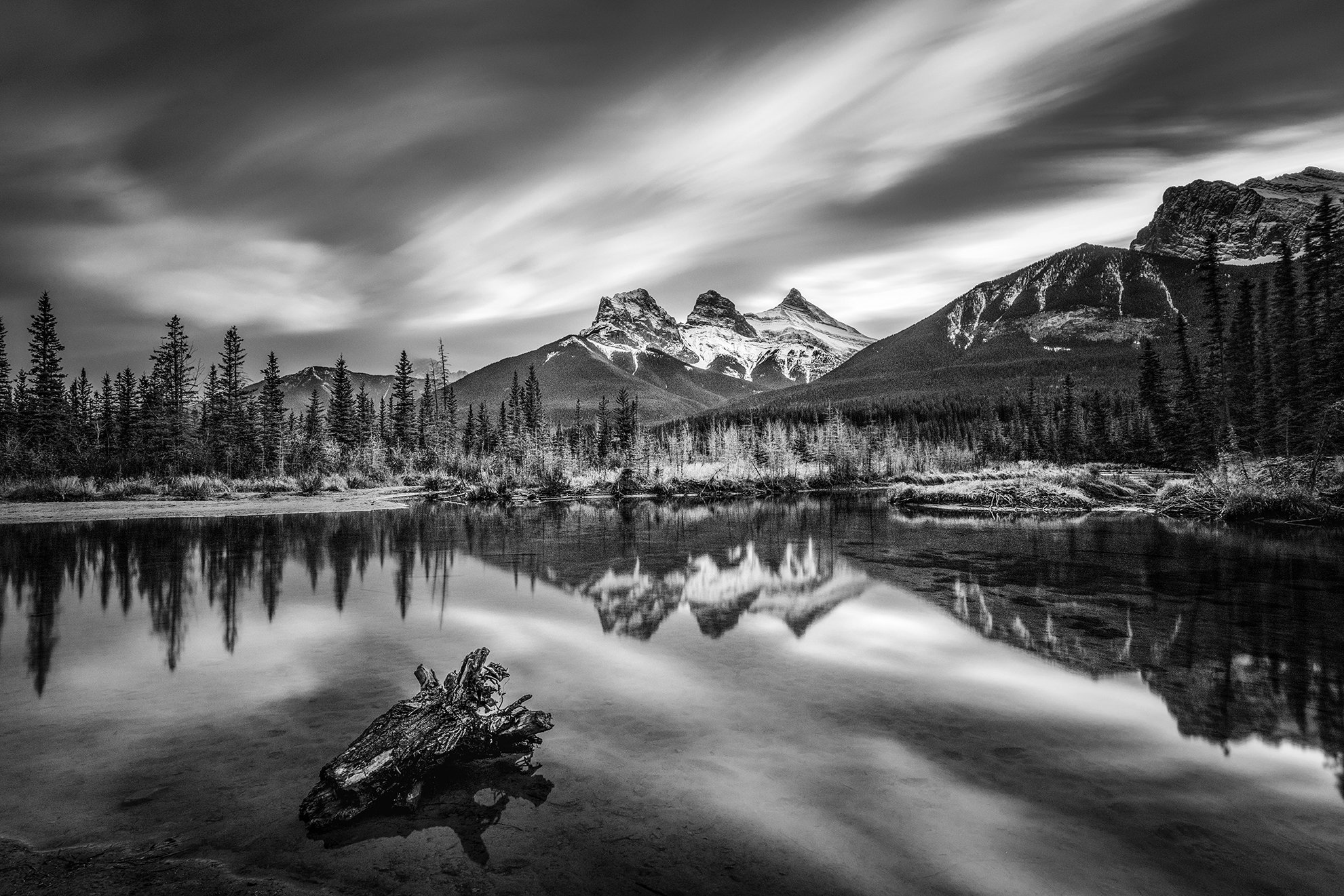
Sunrise at the Three Sisters Reflection Pond in Canmore, Alberta, Canada
BONUS!! #11. Learn from your mistakes & successes -The number one thing that has improved my landscape photography the most is learning from my mistakes and successes while shooting. Every single shoot that I go on, in spending time with my images afterward, I self critique where I made mistakes in exposure, focus and composition. This analysis has helped me to refine my techniques and remember to look for things that I didn’t think to look for when I was first starting out.
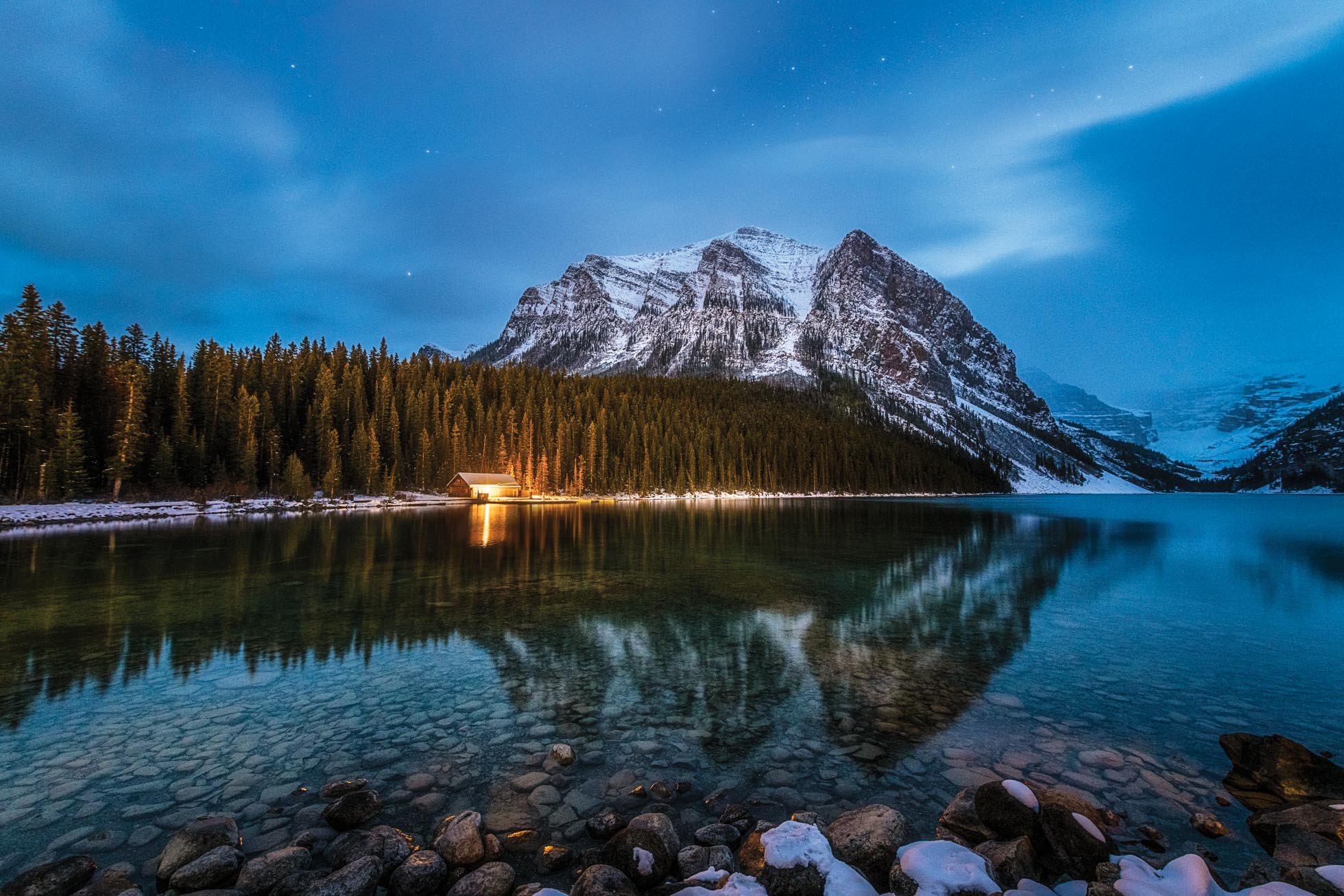
Night capture of Lake Louise boat house in Alberta, Canada. Image is a merge of an exposure for the boat house and another for the rest of the scene.
Kristen Ryan is a landscape and fine art photographer residing in the Midwest suburbs of Chicago. All images can be purchased in the Fine Art Store. Kristen leads ladies landscape photography retreats in the Tetons, Chicago, and the Canadian Rockies, offers private mentoring and teaches an online landscape photography workshop twice a year.

10 Tips to Improve Your Landscape Photography
1. Learn the fundamentals - It is really important to understand all the settings of your camera and have a solid understanding of the exposure triangle and white balance. Having a solid understanding of how to use ISO, aperture and shutter speed will not only create better technical photographs but increase your artistic creativity as well.

2. Buy a great tripod and USE it!
I know no one is excited about another heavy piece of gear to carry but a tripod is one of the best investments you can make in your landscape photography. A tripod will help increase the sharpness of your images by keeping your camera steady. This is especially crucial when bracketing images or using slow shutter speeds. This is such an easy step to achieve in improving your landscape imagery.

This 30 second exposure in the Tetons could not be achieved without a tripod
3. Shoot In RAW
Landscape photography often means shooting in light with a high dynamic range. In order to capture and keep all the details in your image, you want all the information that a RAW file will capture. RAW files are much more forgiving when you make a mistake an underexpose your image. You can often rescue a underexposed image without damaging the image quality with a RAW file, but not with a JPEG.
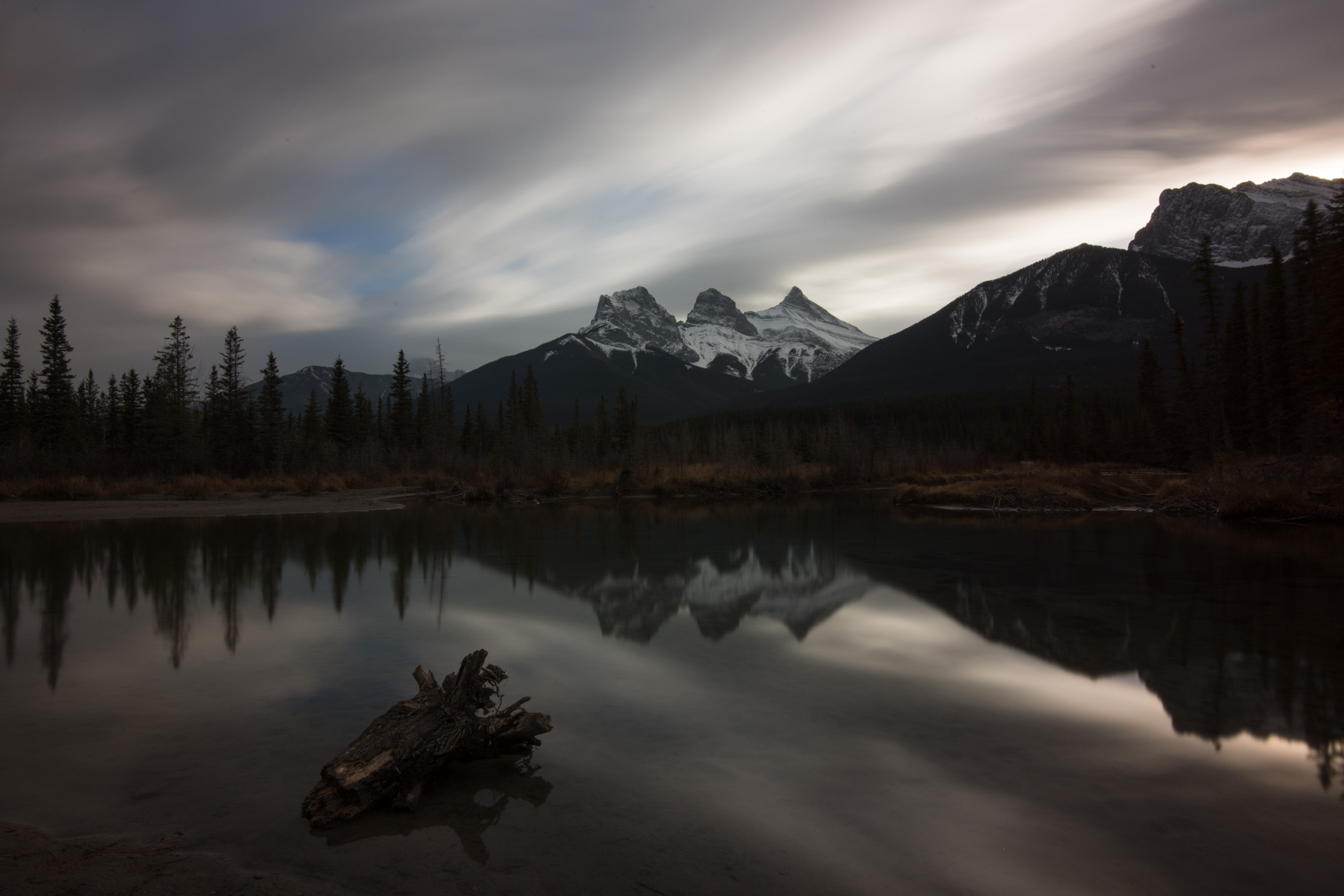
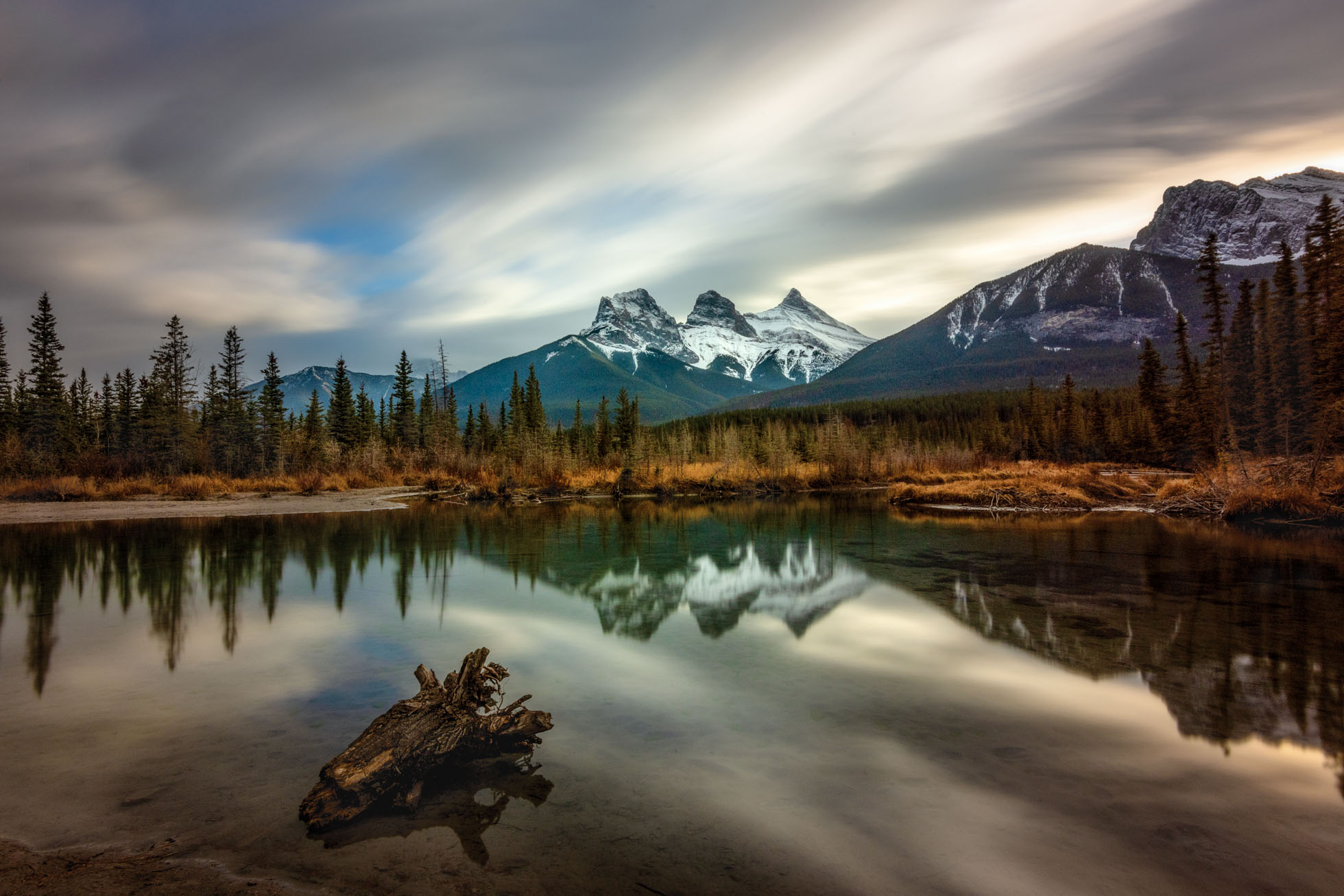
4. Learn Basic Post Processing
Learn to process those RAW files so that you can bring out the scene you captured. Even the most basic RAW adjustments can go a long way to transforming the straight out of camera file you captured. Lightroom is excellent for cataloging and quick adjustments and is easy to use. Remember that often just some small adjustments are all you need to take an image to that next level.
See BEFORE & AFTER below of the Three Sisters in Canmore, Alberta Canada.
5. Get out in the right light
There is a reason landscape photographers get up early and stay out late. The light at these times will create more compelling and dynamic images. Yes, it is possible to create incredible photographs in the daytime hours, but more often than not, those golden hours into night time will raise the interest in your landscape imagery.
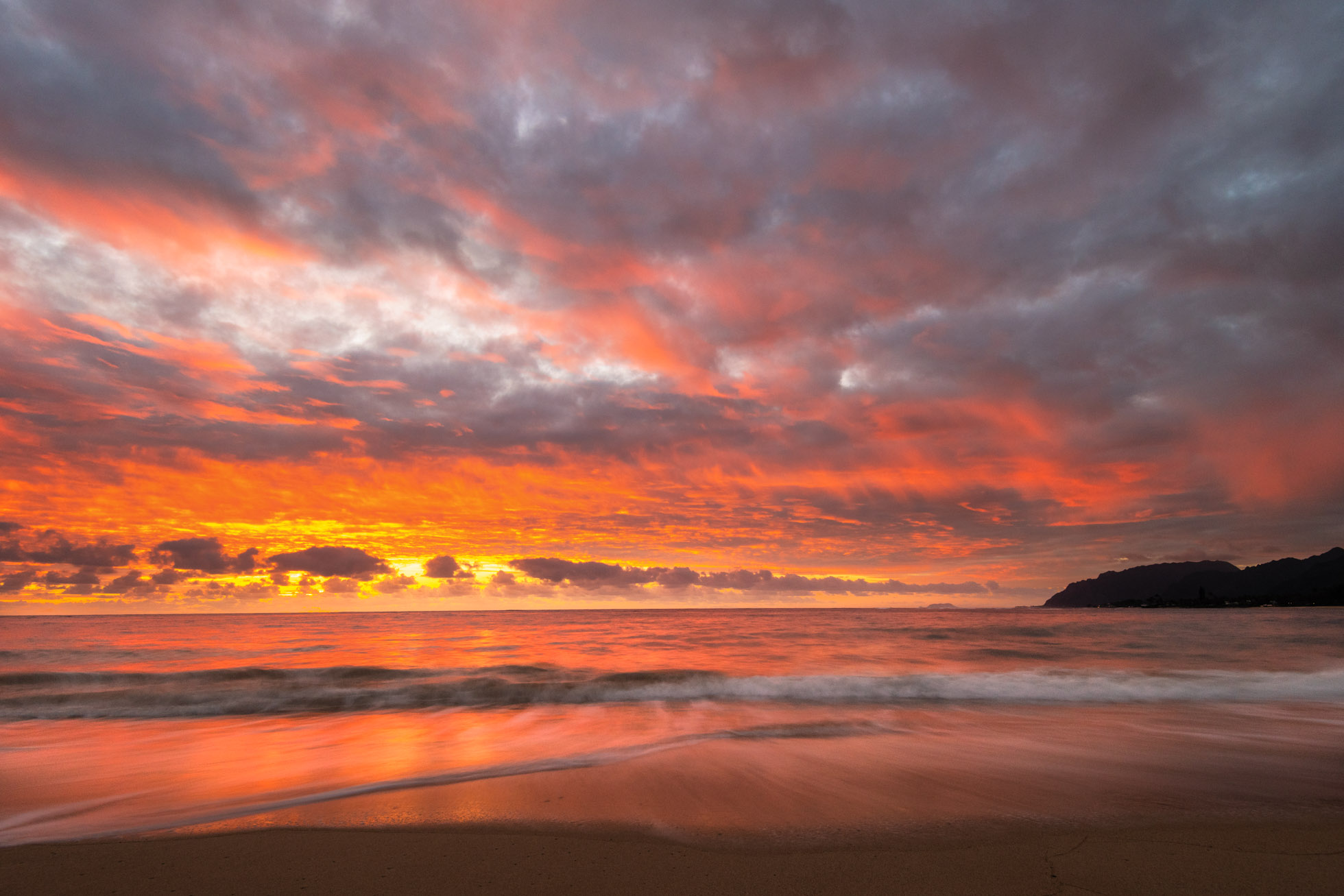
Sunrise in Oahu, Hawaii
6. Experiment with perspective
You got the tripod, set it up, and stay there shooting away, right?! NO! Always vary your perspective. Get high, get low (even if that means taking the camera OFF the tripod), find some framing, look for leading lines and foreground interest. Perhaps there is a perspective that grabs you right away. Capture it. Then move around and find another one.

In this image, I used the ice in the foreground to create depth, a unique perspective and a greater sense of season and story.
7. Be creative with your shutter speed
In landscape photography, creative use of a shutter speed is often what takes an image from pretty to WOW! When photographing water or clouds in particular, a creative shutter speed allows you to put your own artistic spin on a scene that makes it unique. Finding the ‘right’ shutter speed for your vision can be a process but a fun creative experience.

.4 seconds of waves in Oahu, Hawaii
8. Vary your focal length
Often with landscape photography we naturally think the widest angles are best. And often this is true, but not in every case. Sometimes the widest angle will make our subject appear too small in the scene and we need a middle focal length. Other times it is details that draw our eye which can only be captured by a telephoto lens. Many times I try to capture a scene with various focal lengths to create several unique images from the same location. In the grid below the images are focal lengths as follows:
35mm. 70mm
130mm 200mm
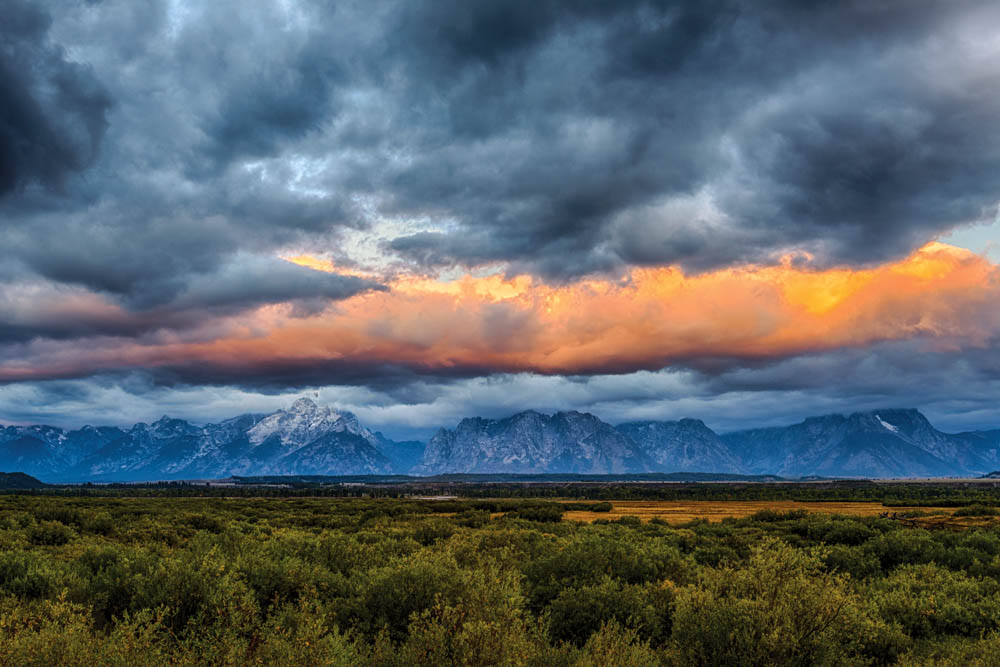
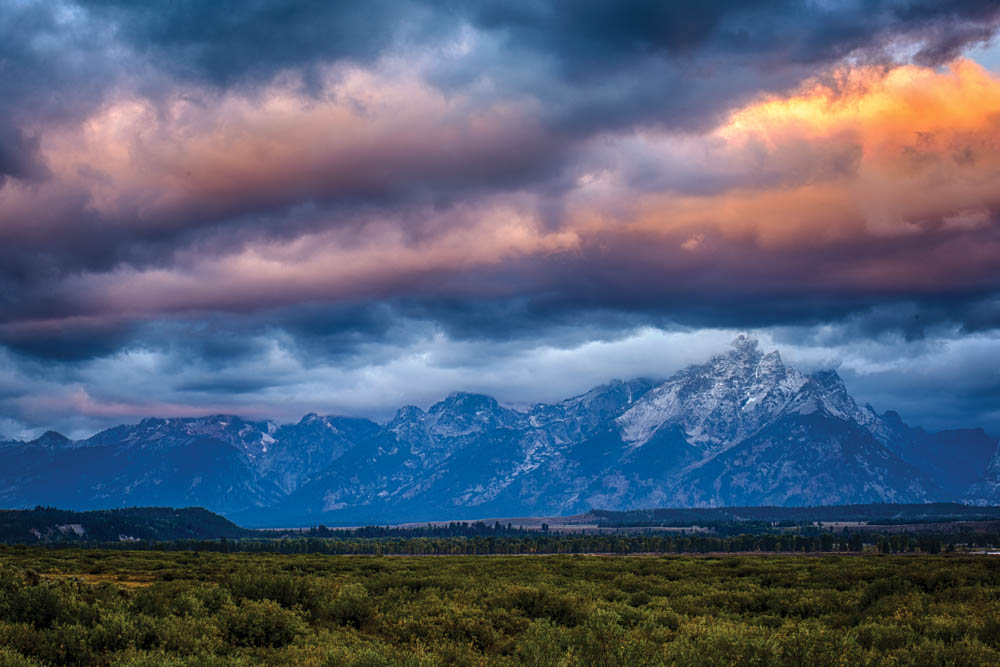
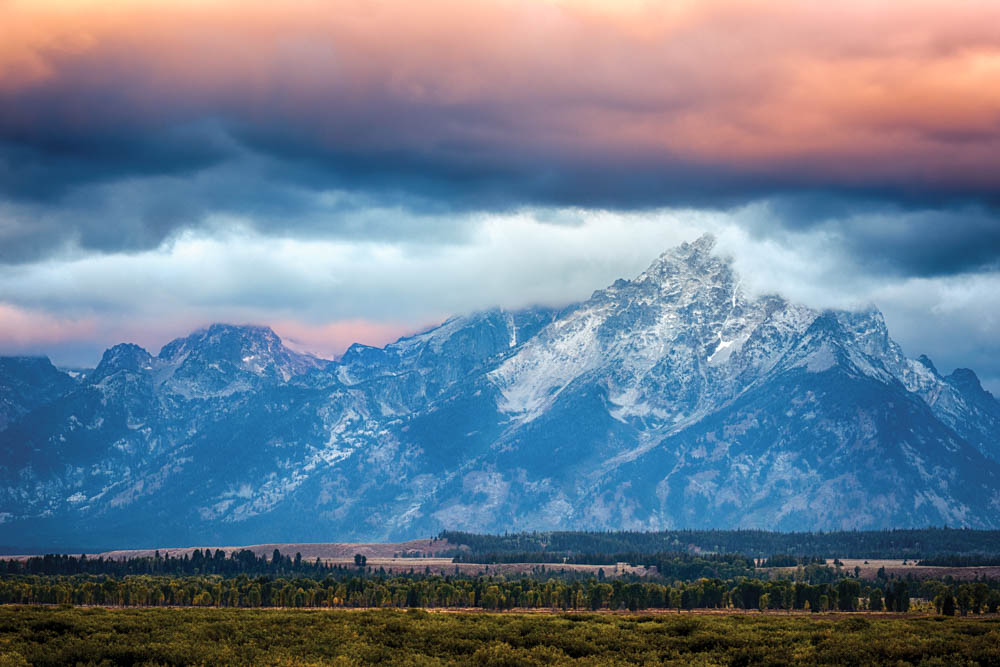
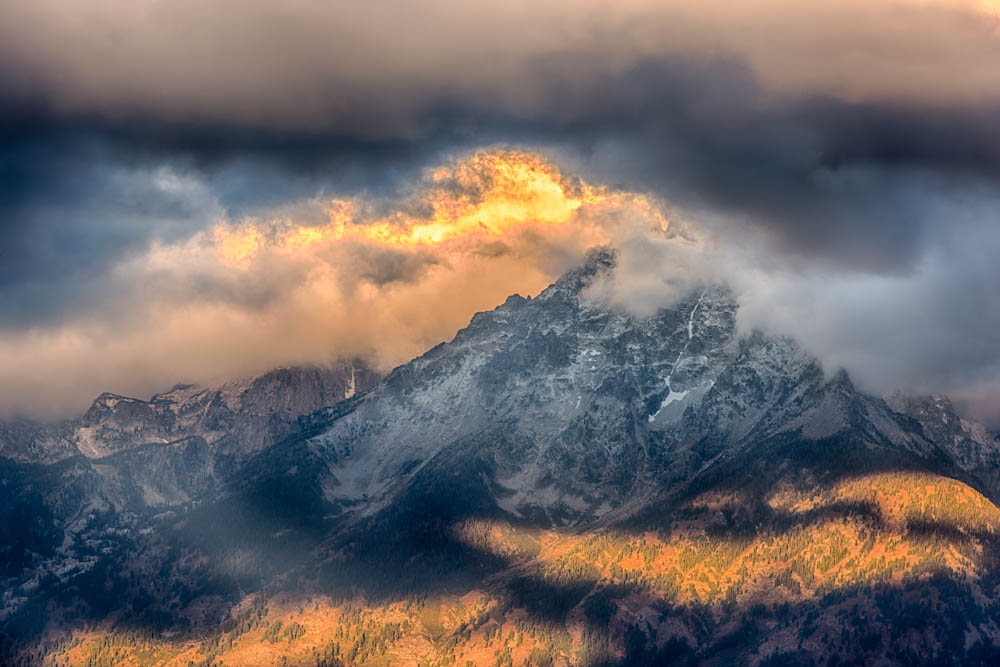
9. Slow Down
Instead of quickly snapping the shutter, slow down and take in the scene in front of you. Consider the light. Thing about what is drawing you to the scene and why. Think about how you are feeling. Look for a unique perspective and take your time setting up the shot.
10. Capture what speaks to you!
In any scene you are capturing, there is something or some number of things that are drawing you to that scene. Perhaps it is the overwhelmingly wide expanse of the land, the way the light is hitting the trees, the curve of a wave, or the formation of the clouds at the tip of a mountain. Hone in on the beauty that is speaking to you and use your tools to capture the scene in a way that highlights those details. Listen to your inner voice and follow it. Always shoot for yourself, to satisfy your own inner artistic voice.
Check back next week for more tips to improve your landscape photography!

A beautiful icy and snowy afternoon in the Midwest
Kristen Ryan is a landscape and fine art photographer residing in the Midwest suburbs of Chicago. All images can be purchased in the Fine Art Store. Kristen leads ladies landscape photography retreats in the Tetons, Chicago, and the Canadian Rockies, offers private mentoring and teaches an online landscape photography workshop twice a year.
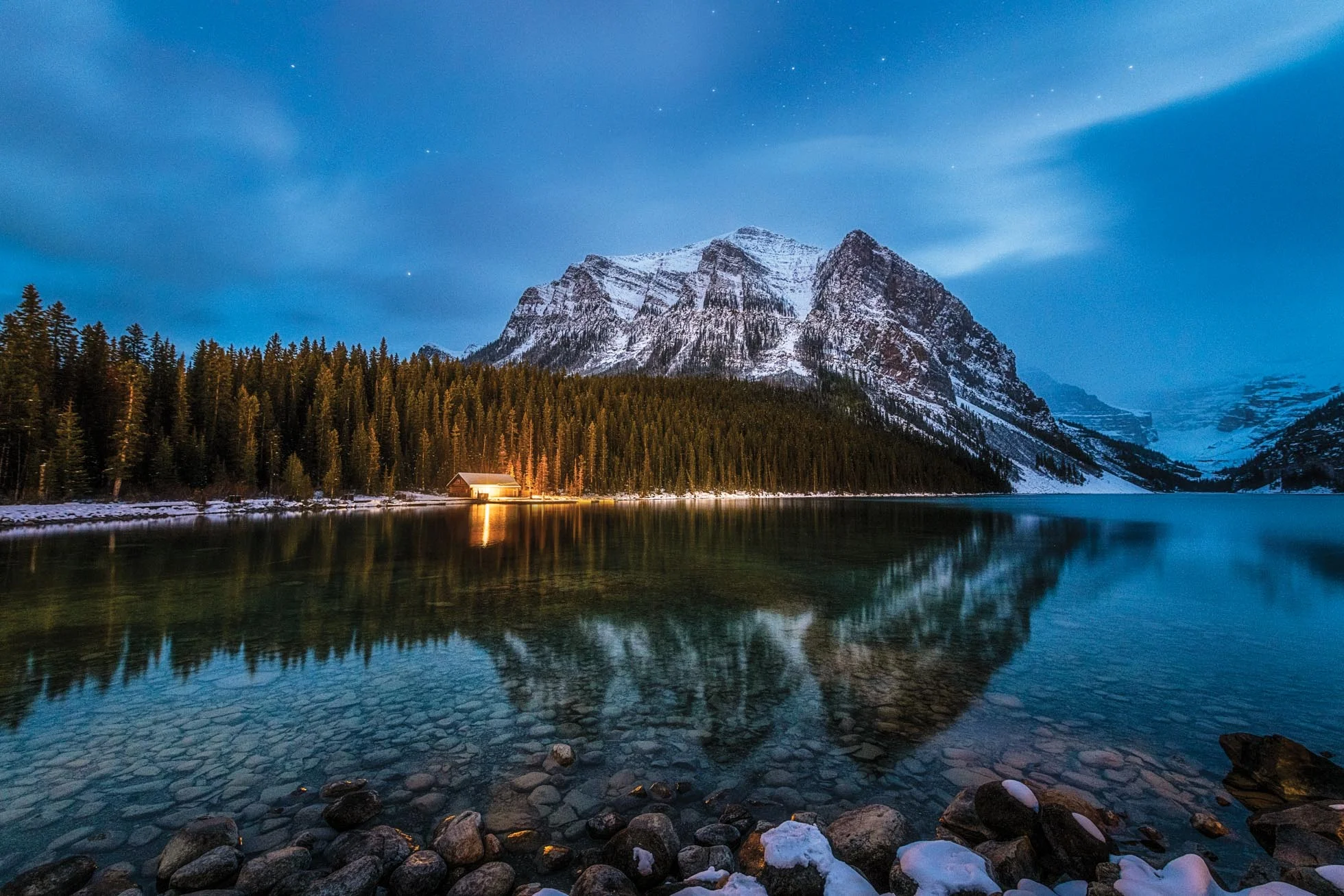
Serenity in the Canadian Rockies
I adore this “Serenity” project as photography really is something I love for the ‘serenity’ it brings me. The time I spend in nature capturing the beauty of the world brings me to a place of peace. There is nothing like the sound of the ocean or the expanse of the mountains to bring a calm to my mind and body. This place of serenity is something that continuously reminds me why I pick up my camera and especially why I seek landscape photography as my favorite genre.
I love to travel to new beautiful places, but I also love to return to favorite places I have traveled before, revisiting favorite locations and capturing images in different light and weather than I have in the past. Last November I traveled up to Calgary to meet up with one of my best photographer friends, Gina Yeo, for an adventure in Banff National Park. We had only a few days and a mix of forecasted weather but we covered a lot of ground and capture, sunrise, sunset, twinkling stars, falling snow, low dramatic clouds and amazingly, the incredible aurora!
There is something wonderfully serene about November in the Rockies. As the weather turns cold and the snow starts falling, the mountains take on a pristine beauty and the crowds are thin. Just us and the awe inspiring beauty.

Beautiful Bow Lake

Starry night over Mt. Rundle

Lake Louise Boathouse

Sunrise at Lake Vermilion

Aurora at Lake Minnewanka
Continue the circle to see what brought my friends Serenity this month. Next up is my good friend, Emily Hamson of Lavender Lime Photography.
I am delighted to share that Gina Yeo and I have teamed up to offer “Enchantment in the Rockies”, an incredible 4 day ladies landscape photography retreat in the Canadian Rocky Mountains. Sign up for the Retreat Update Newsletter for all the info and priority registration!
Prints available through the Fine Art Store or contact me for special requests.
Seascape Panning
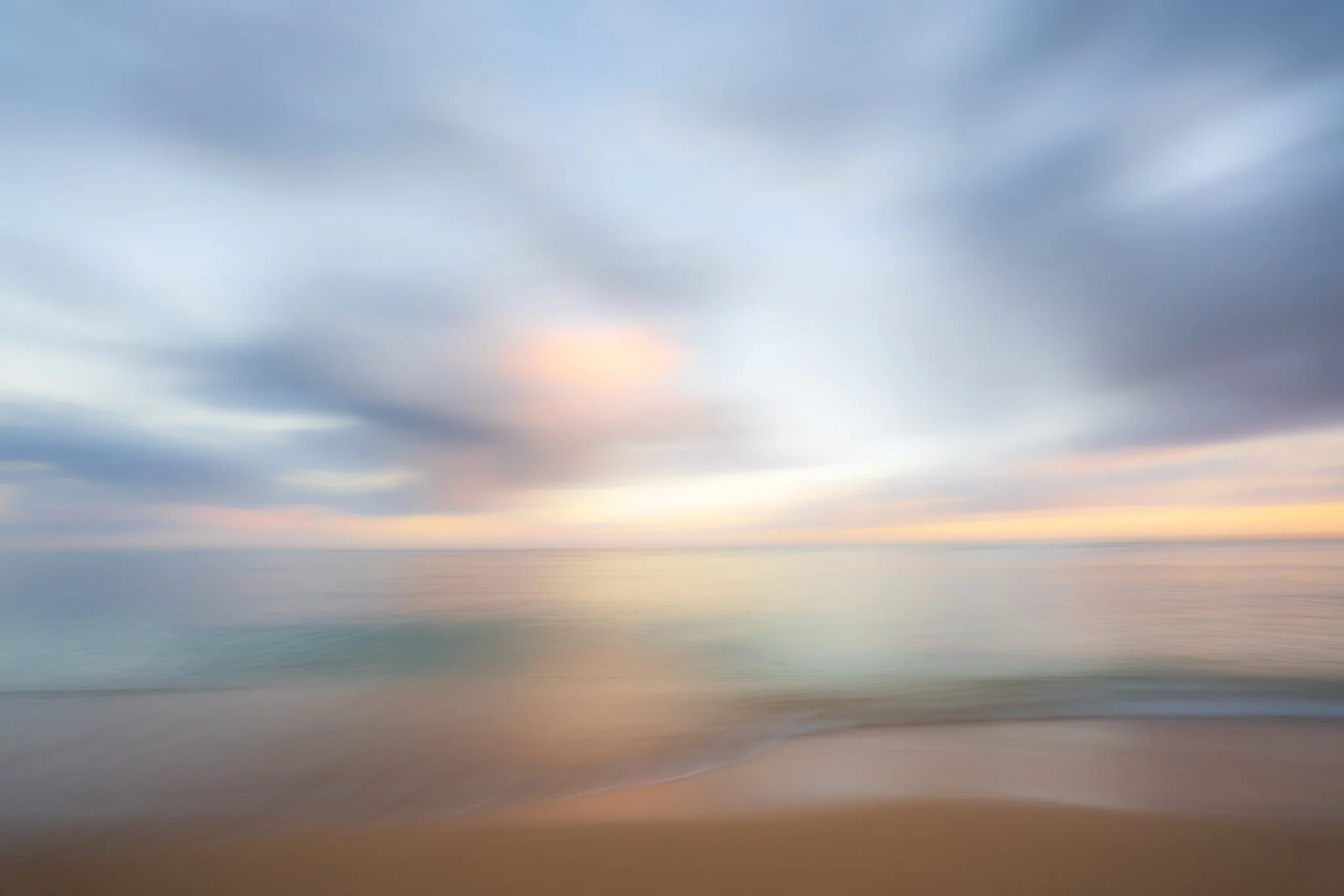
One of my favorite techniques to play with at the beach is horizontal panning. It is really simple and can create a beautiful dreamy effect of the water, sand, and sky in any combination.
You will want to use a shutter speed between about 2 seconds up to around 1/30 of a second or so. To do this, you’ll need to set your ISO quite low and close down your aperture significantly. If during the day, you may need a Neutral Density Filter to block some light. A 6 stop or 3 stop filter would be best in this situation. A 10 stop filter will be more than you need and just make things harder.
You can use a tripod or shoot handheld. A tripod may keep you steadier horizontally but handheld works too so definitely don’t hesitate to try this without a tripod. In either case, you’ll want to frame your shot and focus on your scene and then after you press the shutter, or AS you press the shutter with the faster shutter speeds, just pan the camera to the right. When I shoot handheld I hold my arms close to my body and just turn my body to keep steady. If shooting around 1/30 of a second, you’ll need to move quicker to get the effect. With a second or two you can go slower as you have more time.
Sometimes it helps to start moving and then press the shutter, or you can also try putting your camera on continuous mode and as you twist your body press the shutter and let it take several shots as you move left to right.
The fun thing is that you get a slightly different effect each time. You may get a bunch you don’t like along with one or two that you really love. The painterly effect is subjective so choose the ones that YOU love!
Have questions, feel free to reach out!


Looking for a 6 stop filter to help you reduce the shutter speed? Check out Maven Filters. * I always have a 6 stop in my bag for capturing this effect and others!
Kristen Ryan is a fine art landscape photographer from the suburbs of Chicago. You can purchase prints in the Fine Art store or contact her for custom orders. She teaches an online landscape photography workshop, “The World Around You” and hosts in person ladies’ landscape photography retreats.
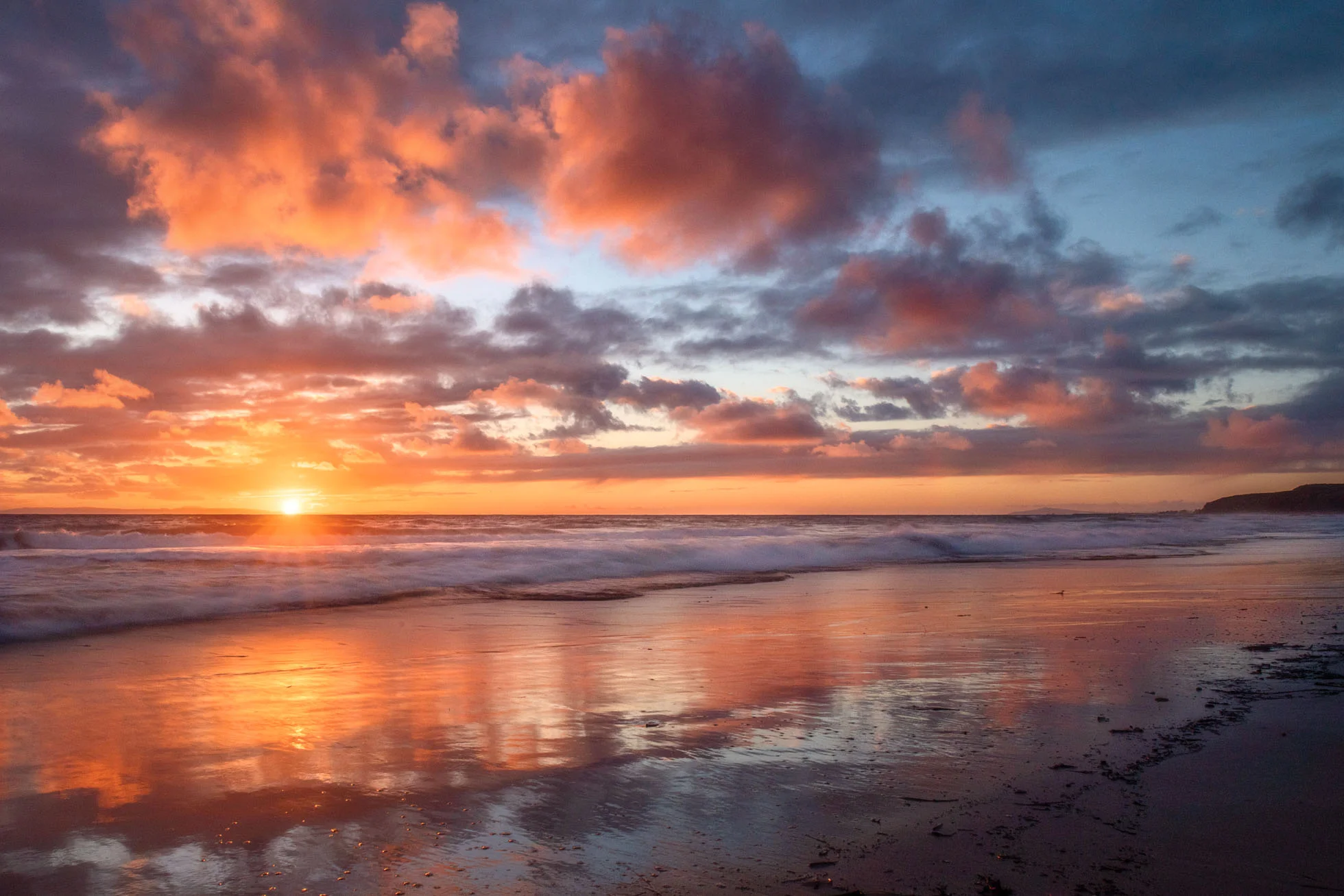
Serenity of Seascapes
Another month gone by and it is already time for our Serenity blog circle to come together and share those moments and images that brought us serenity this past month. Many of us attended the Click Away conference in Dana Point, California earlier this month and I’m sure we’d all agree that the Pacific Ocean is a perfect recipe for serenity! Despite the chilly and sometimes rainy weather, we all felt rejuvenated by the crashing waves, beautiful views, and colorful sunsets. The only thing that competed with the views were the incredible friendships and connections grown stronger through the weekend.
I was fortunate to be asked to attend as an instructor at this year’s conference and taught three classes on shooting dreamy seascapes and long exposures. Not only do I find great serenity in viewing seascapes captured with slow shutter speeds, but the process itself is extremely calming and mindful. When I am out by the ocean with my camera and tripod, experimenting with shutter speed and timing of the waves, I am completely in the moment. My worries and anxiety disappear as I become engrossed in the creative process.

Panning at Crystal Cove
We were lucky to be able to shoot sunset each night and I was able to visit several different beaches in the area, from Dana Point, Laguna Beach and Crystal Cove State Park. As always I have many I have yet to touch, but I have spent time with a handful of my images and they bring me back to those beautiful moments on the beaches with friends.


Click on over to my talented friend, Nancy Armstrong, Kansas City Fine Art Photographer to see her view of Serenity this month and to follow the circle.
All images available in the Fine Art Store. Custom sizes and prints available upon request.
What Do You Do With An Idea?
Have you ever had an idea, a big idea? An idea that just kept staying with you and nagging at you despite uncertainty of whether it was a GOOD idea? What did you do with that idea? Did you ignore it? Did you do something with it? Do you have one of those ideas now?
A few months ago, September to be exact, I was signed up to be the ‘mystery reader’ in my 2nd grade son’s classroom. I wasn’t sure what book he would want me to read, so I asked the teacher to grab me a couple books. One of the books she handed me was titled, “What Do You Do With An Idea?” By Kobi Yamada. While it is a children’s book, I know the words had a much bigger impact on me that day than any of the children listening.
The inner tab of the book says “This is the story of one brilliant idea and the child who helps to bring it into the world. As the child’s confidence grows, so does the idea itself. And then, one day, something amazing happens.”
The way the story in the book goes, the “idea” is more of a true object that follows the child around and won’t go away. The child tries to ignore it and walk away from it, but it sticks around and gradually the idea grows on the child.
“I showed it to other people even though I was afraid of what they would say. I was afraid that if people saw it, they would laugh at it. I was afraid they would think it was silly,” the child says. And some people said it was a waste of time and he almost listened. But instead he decides that his idea deserves his attention because “no one knows it like he does”. So the idea grew and grew, as did his ‘love for it’.
After all that attention and love, “one day, something amazing happen. My idea changed right before my very eyes. It spread its wings, took flight, and burst into the sky.” And at the end, the child says “And then, I realized what you do with an idea… You change the world.”
I love the way this is written so simply as a children’s story and yet holds inspiration for people of all ages. The timing of reading this story resonated so strongly with me that I had a lump in my throat at the end. Only 3 days later I would be flying to Jackson Hole to host my second Magic in the Tetons ladies retreat, and this story made me think of my idea for my ladies’ landscape photography retreats.
Just like the child’s idea in the book, my idea for a women’s landscape photography retreat followed me around for quite some time. It began a couple years before I took any steps to make it a reality. The idea just stuck in my head and sometimes I would dream about the idea and then put it aside to go about my life. Sometimes I would talk about it with my husband, or with friends. While I received nothing but encouragement, the idea seemed large, and daunting to figure out all those details. Not the part of actually being there with the ladies. That part I felt like I could do in my sleep. I’d known the Tetons since I was little, after all. But the planning and pricing and getting a permit; well, those details felt overwhelming. And putting it out there for people felt even scarier.
There were plenty of landscape photography workshop out there, and there were other types of ladies’ retreats, but my research didn’t show any Ladies Landscape Photography Retreats. I was convinced we needed one. After teaching my online landscape photography workshop, The World Around You, for several years and teaching at larger conferences, I believed that an intimate retreat for nature loving women to come together and chase the light in a beautiful place was exactly what many of us needed. So often, we, women & moms, don’t take the opportunity to feed our creativity and connect with other like minded women. If I needed it, wouldn’t others? But would anyone sign up?
I love the Tetons, I love landscape photography, and I love connecting with and helping other women who share my passions. And so I took the risk, and followed my idea. I dove in and made my idea a reality. It took me out of my comfort zone and it was absolutely scary. In fact, I remember when I finally announced it, I was convinced I would pass out or throw up.
Did it change the world, like the child’s idea in the book? Well, no, it didn’t change THE world. But it definitely changed MY world! Because I now have amazing memories and adventures that are so special to me, and I share them with 18 beautiful friends, for whom I am so thankful.
I feel so much gratitude that this adventure has been successful thus far, for all the ladies who put their faith in me and the experience I am offering, and to those who have expressed interest in joining me in the future. What if it hadn’t been a success though? When I took those first steps to make it happen, I thought, if nothing else, at least I will have tried, and I won’t wonder “What if?”.
So I wonder, do YOU have an idea? One that has been with you awhile? One that you want to pursue but fear others’ response? An idea that takes you out of your comfort zone?
Maybe go find the book, “What Do You Do With An Idea?” And see if inspires you to take action. Who knows what can happen. Maybe it will change your world!

Captured in September 2018 in the Tetons
Serenity ~ Abstract Nature
This month creeped up on us in our Serenity Project Blog Circle. With the holidays at the end of December, this month flew by. With the holidays comes lots of chaos and craziness. So many special moments and memories but also so many tasks and things on the calendar and to-do list. Our holiday craziness is always compounded by having my birthday right after Christmas and my twins’ birthday shortly after the new year. With everything going on, I have done very little shooting recently. Though I am craving nature, longing for the beauty of snow, mountains, and magical light. The busy days make me crave those moments of ‘serenity’ where I am out with my camera and tripod and completely absorbed in the moment of Mother Nature’s magic I am preserving with that click of the shutter.
This year we added a ski trip to our winter break and drove up to Michigan with several other families. And while we were there, I played a bit with vertical panning of the trees. There is something about the abstract nature of these images that I find dreamy and soothing. The more I experiment with this technique, the more I love it.


Please continue the circle to enjoy the serene views of my talented friends. First, click over to Iris Nelson, Metro Phoenix Photographer, and see what she has shared with us this month.
18 Landscapes of 2018
2018 was a year of a lot of nature adventure for me with travel to Florida, Mexico, California, Canada, Kauai, and the Tetons! I loved getting out to shoot whether it was a devoted photography trip or just a quick shooting opportunity on a family trip. I have so many images I love from this past year and all of them bring back special memories. I went through and chose 18 favorites to represent my year.
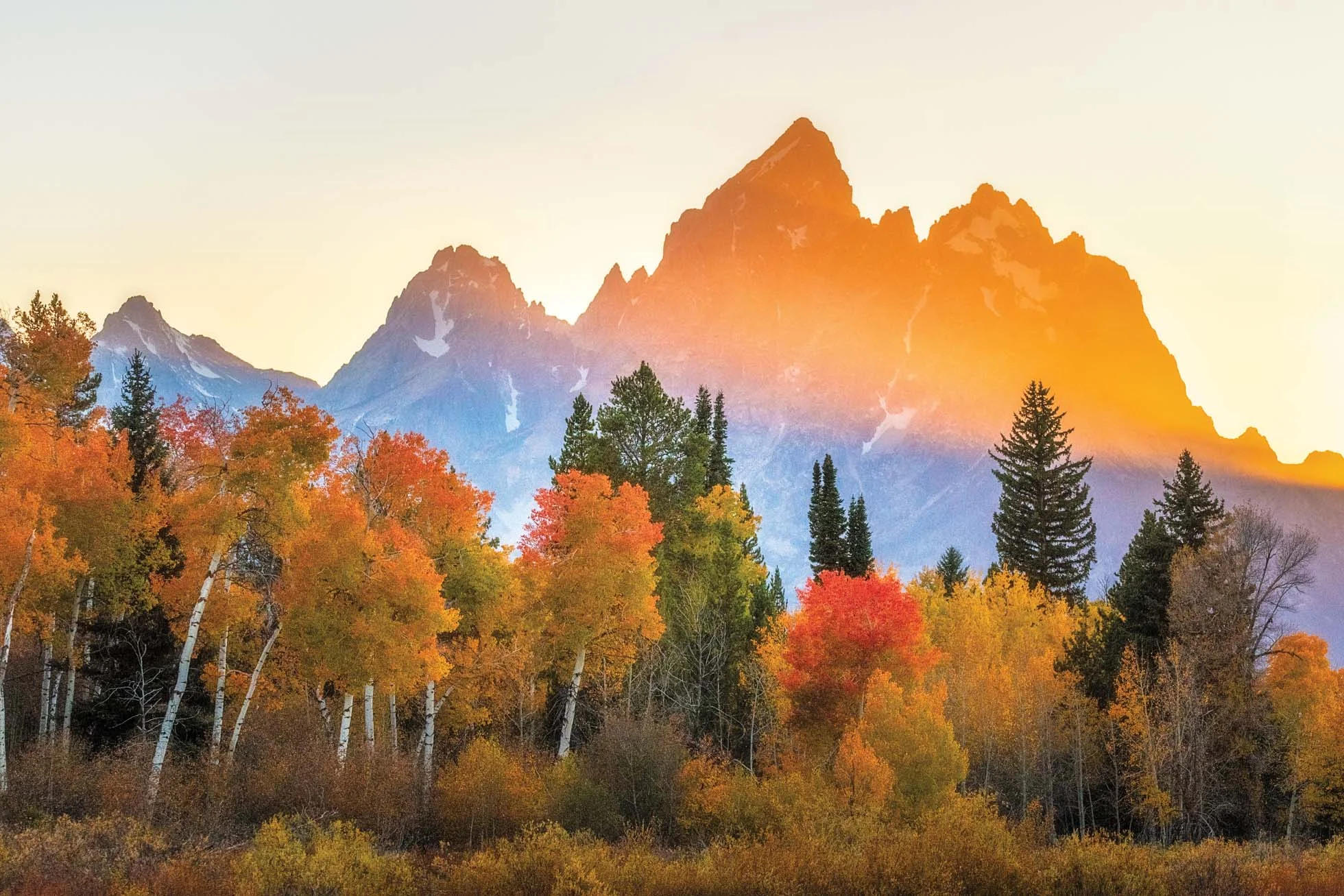
Captured in the Tetons the evening before the 2018 Magic in the Tetons retreat began. After the sun went below the mountains, the light shone across the Grand so beautifully. I grabbed my Sigma 150-600 to capture this scene up close at 150mm.
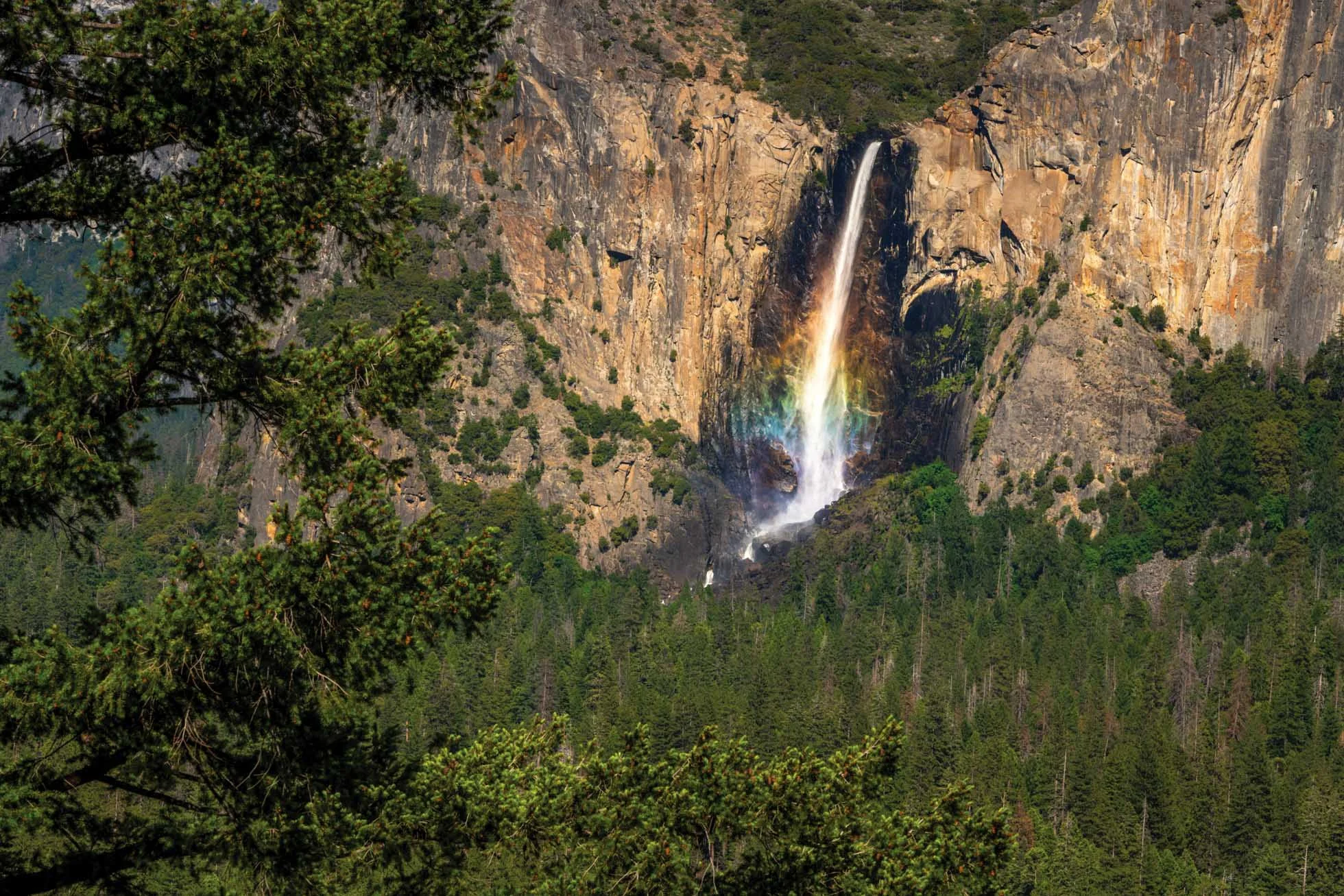
My first trip to Yosemite was short and sweet. Tunnel view was the first stop I made with my mom and the kids. I captured this image of Bridalveil Falls with my Nikon 70-200 at 200mm and was thrilled to see the rainbow of colors in the water.

June brought me back to the Canadian Rockies with my girlfriends where I finally got to shoot Emerald Lake. This image was selected as a finalist in Click & Company’s 2018 Voice Collection.
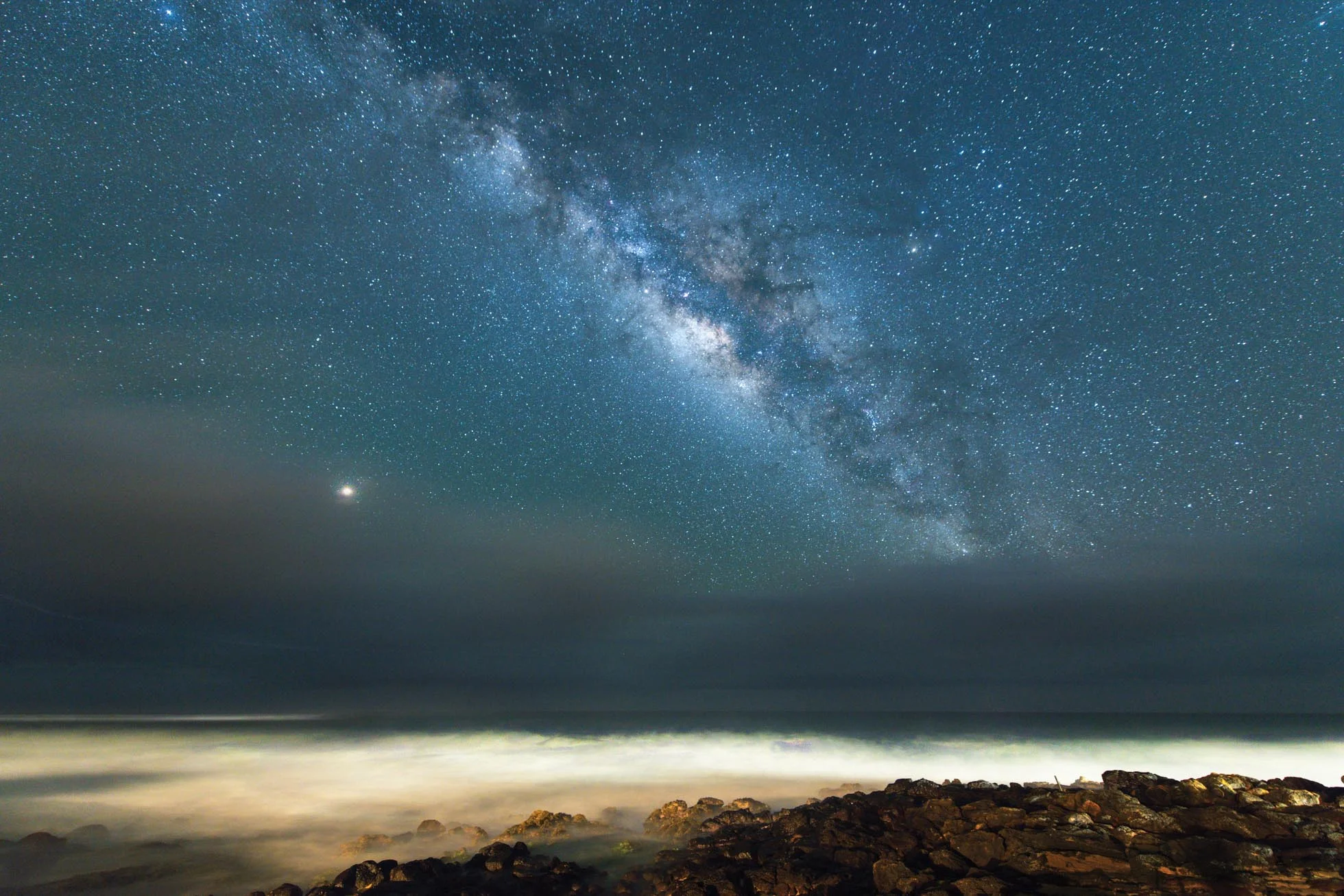
The night sky in Kauai was just amazing this summer. I went out and captured the stars several nights during our stay at the Grand Hyatt Kauai.

June’s trip to the Rockies culminated in this stunning sunset at Lake Louise. I couldn’t help but succumb to my long exposure addiction here!
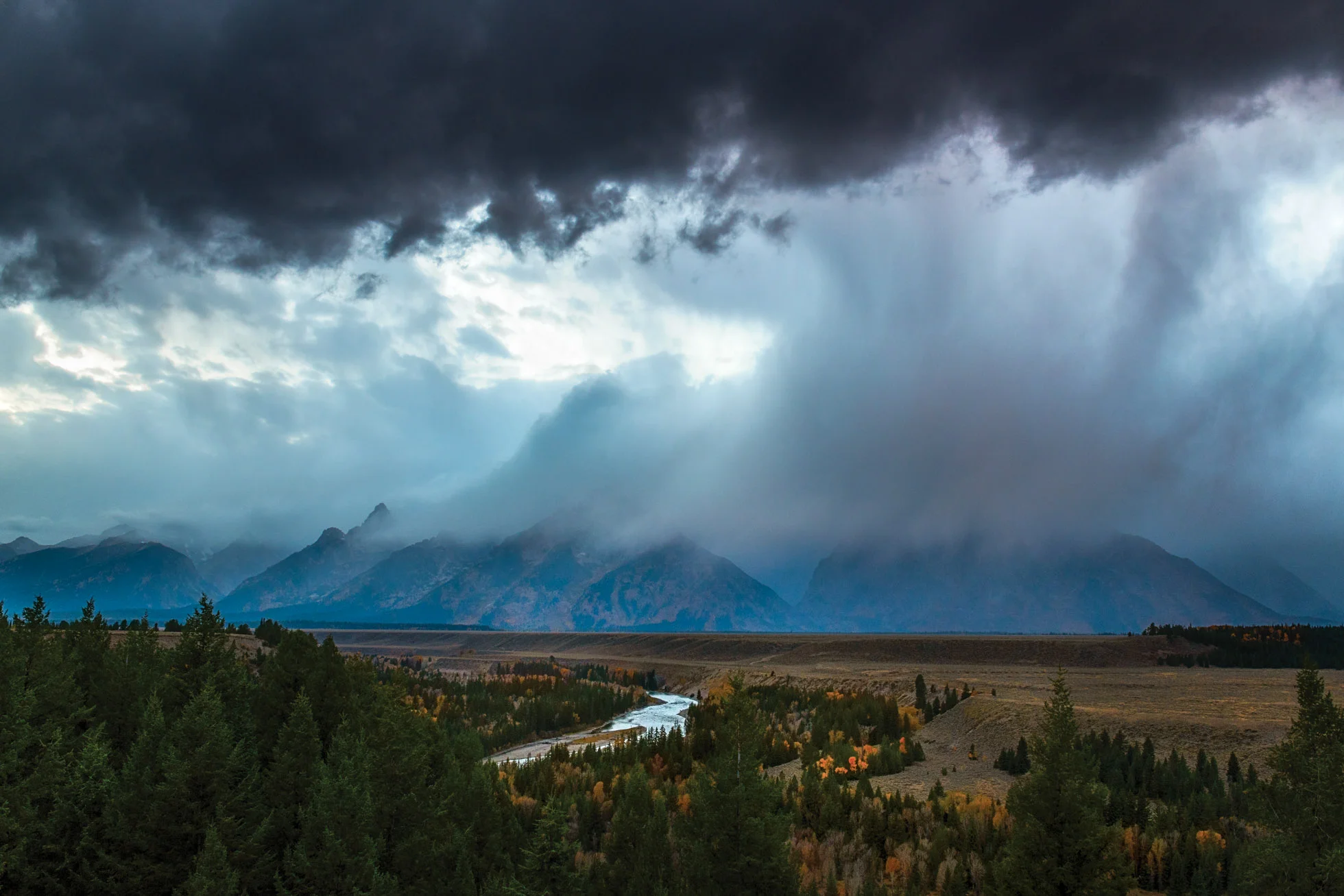
I love a dramatic sky and September’s trip to Jackson Hole for the 2018 Magic in the Tetons retreat brought a couple days of stormy skies. This was captured during my final night during sunset.
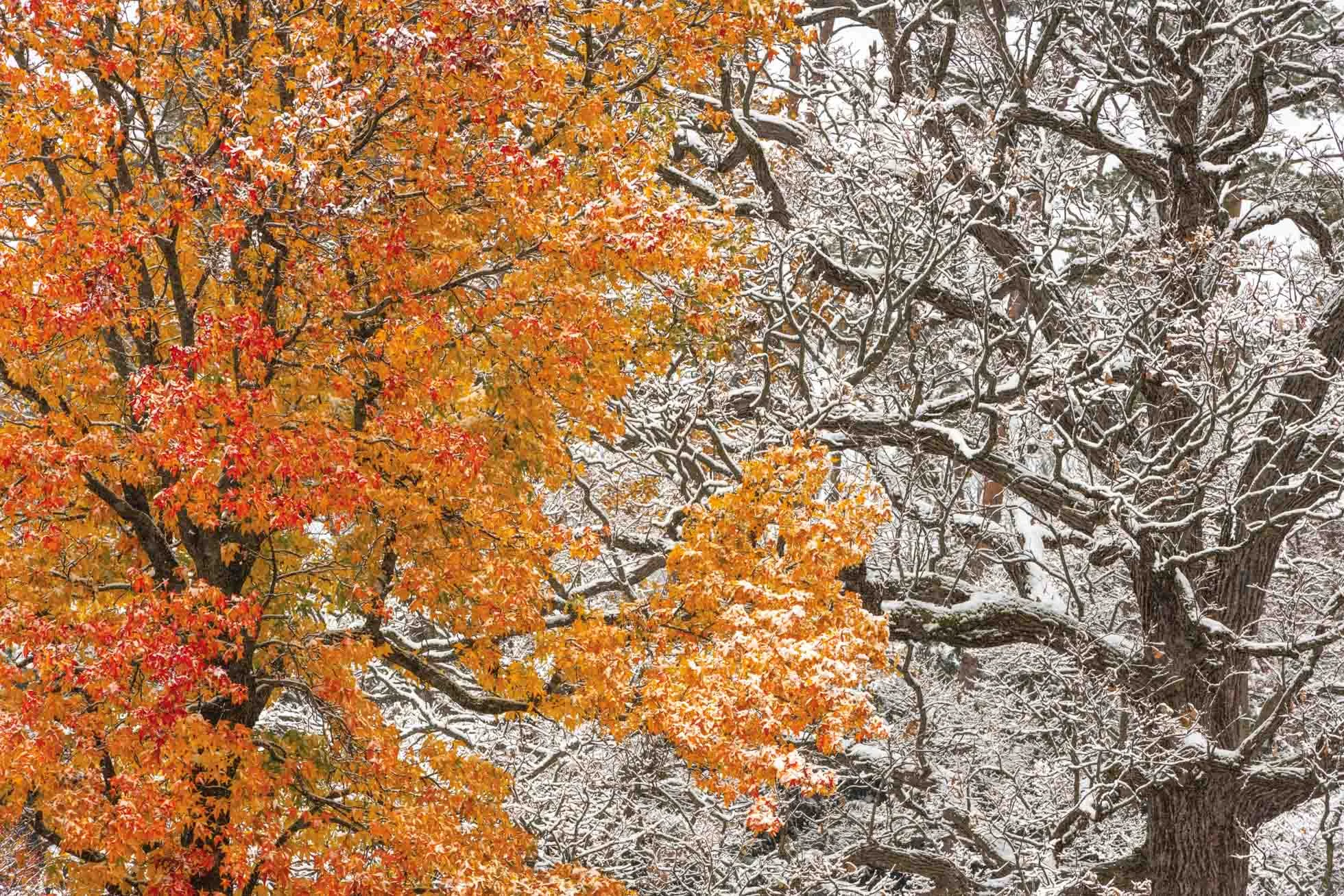
Our first Chicago snowfall occurred just a week after peak autumn color. I took the opportunity to head to the Arboretum and pulled over upon seeing this collision of seasons. This image was selected as part of the “Opposites” story assignment for National Geographic’s Your Shot.

In early November, I took the opportunity to fly up to Canada for a quick weekend with my photographer friend Gina Yeo and we ventured to Emerald Lake for a wintry evening shoot. The low clouds over the lake were just magical.
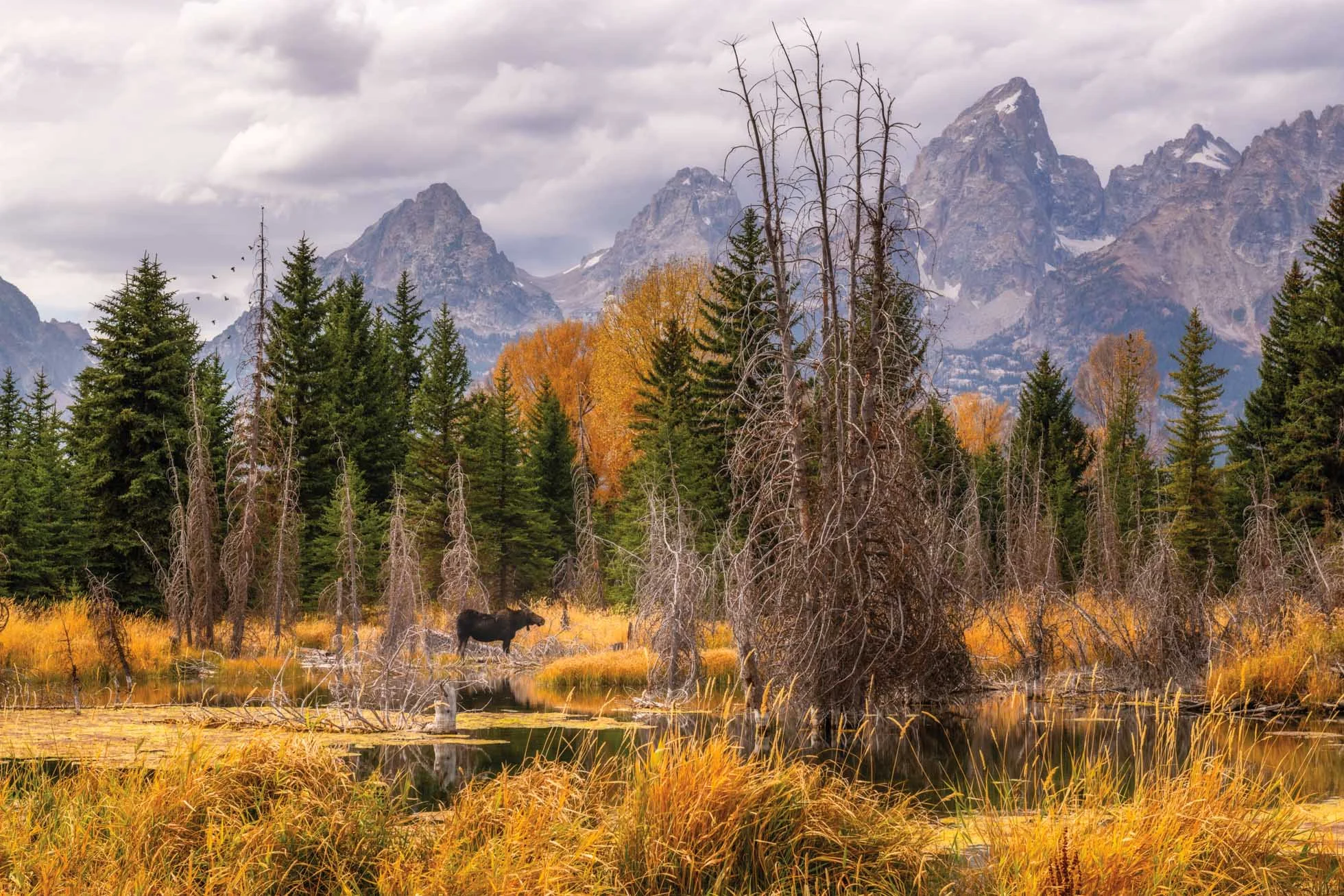
After the Magic in the Tetons retreat, I stayed one extra day and spent the afternoon at this location with a couple friends enjoying the view of the mountains and this beautiful moose.
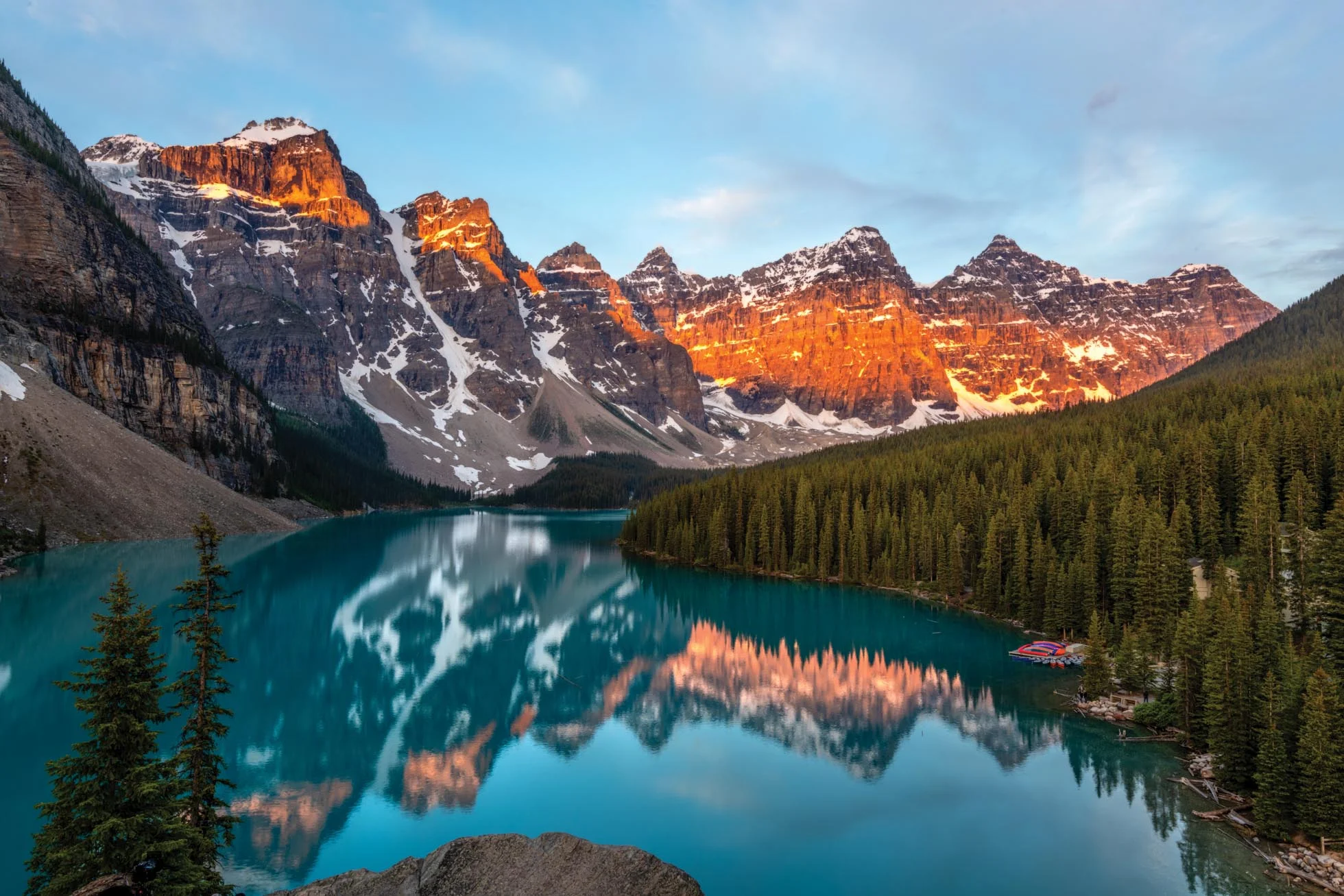
When I visited Moraine Lake in the summer of 2017, I was with my family and did not have the opportunity to capture a sunrise here. In June, my girls, Gina & Addie, & I made sure to make it there for this beautiful reflection of alpenglow.
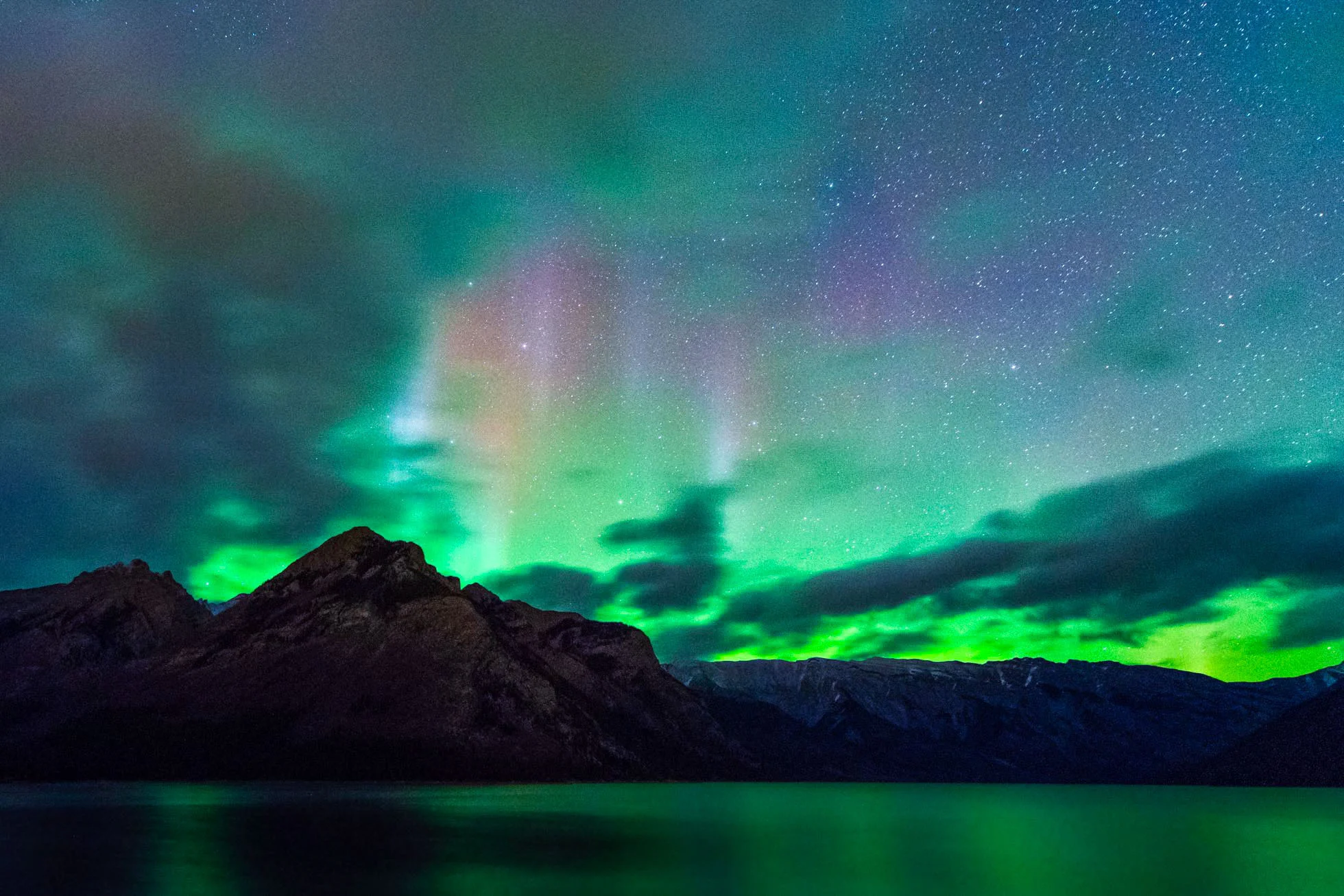
Totally unexpected, my November weekend with Gina culminated in a showing of the Aurora over Banff! This was an absolute bucket list moment for me!

A stunning sunset welcomed me to the Tetons in September! Again, my obsession with long exposures tugs at me when there are beautiful clouds.

Such a stunning beach in Kauai lured me out of bed several mornings for sunrise. I love the softness of the long exposure but the way the waves still have shape.
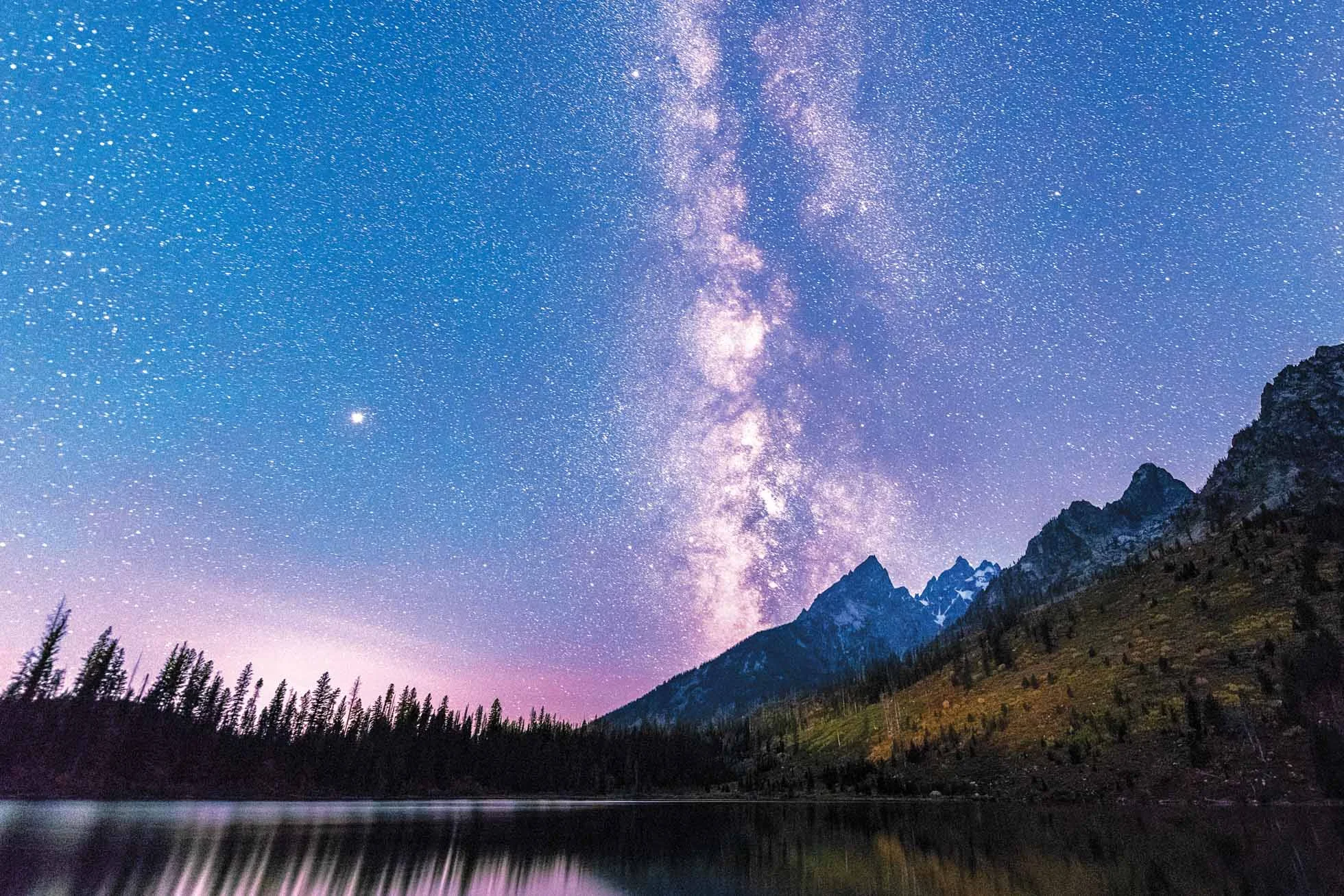
One night of the Magic in the Tetons retreat, the Milky Way would be visible without moon interference. I led my group to this beautiful spot for sunset so everyone would be set up to capture the magic of the Teton nights.
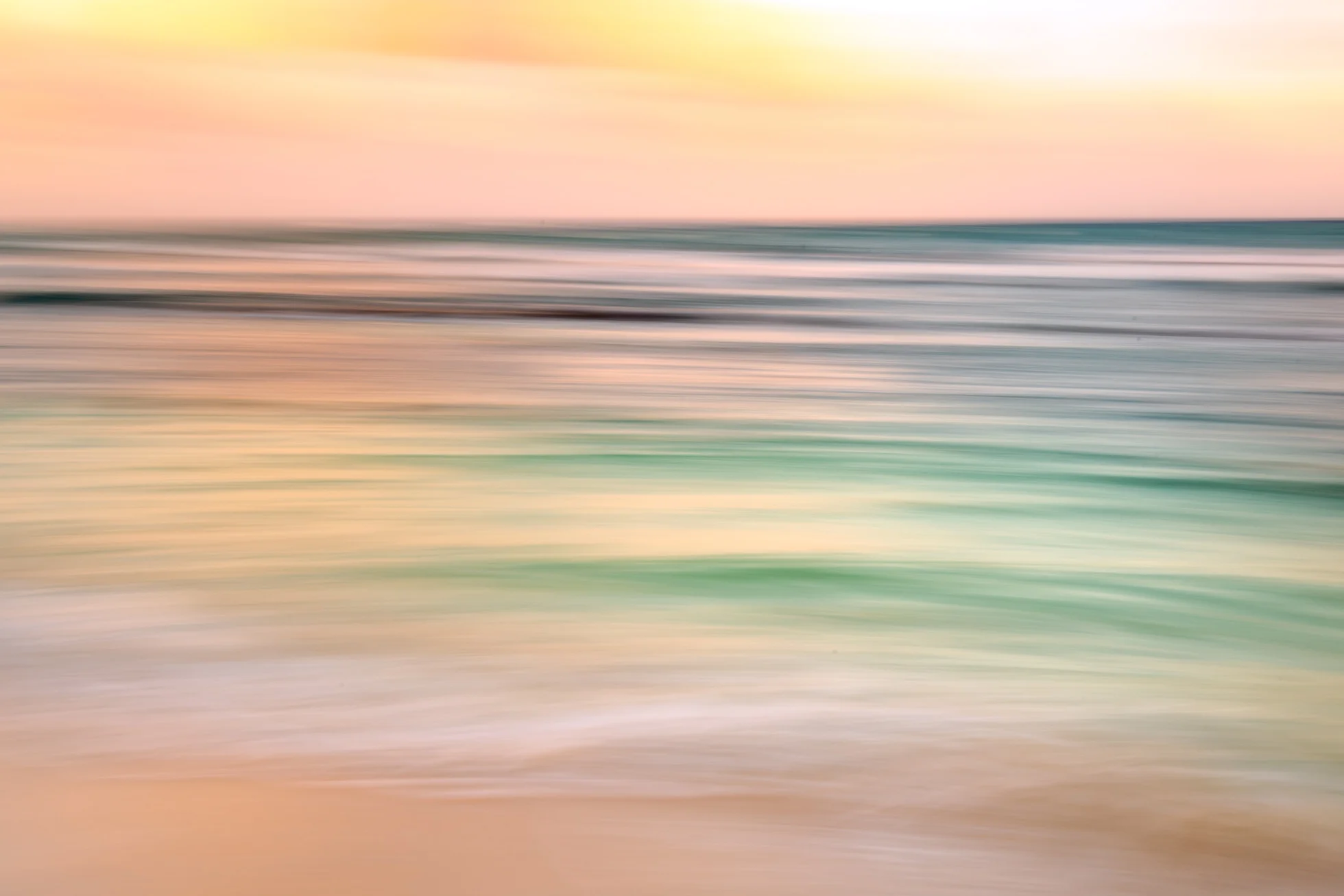
The colors of a sunset and gorgeous water in Mexico provided a great opportunity for this panning seascape.
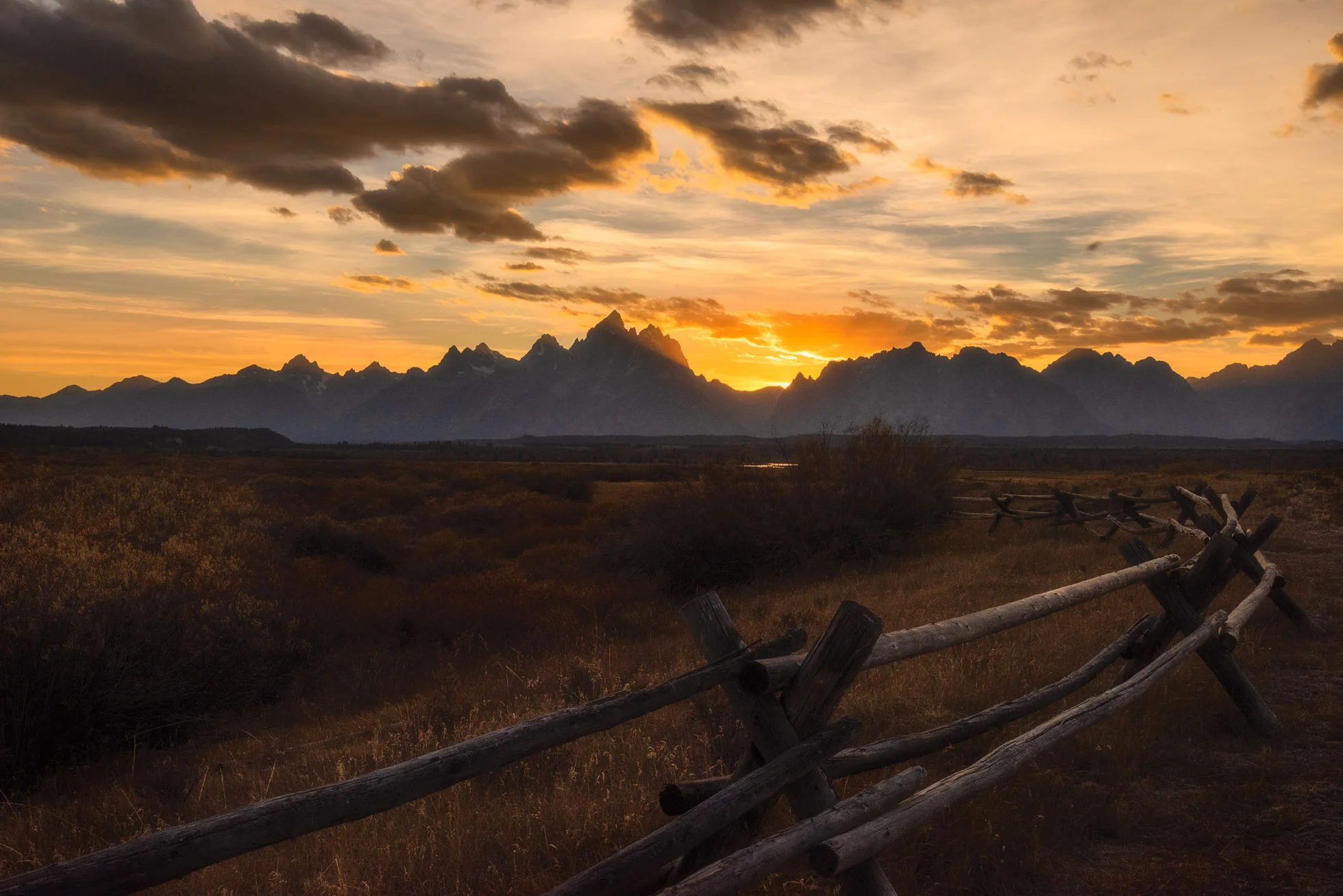
This night in the Tetons was magical. The gorgeous glow of sunset just seemed to last forever! My ladies and I had the best night.

During the Magic in the Tetons we spent a couple hours shooting the autumn colors of the gorgeous trees. This shot is the result of vertical panning for 1 second.
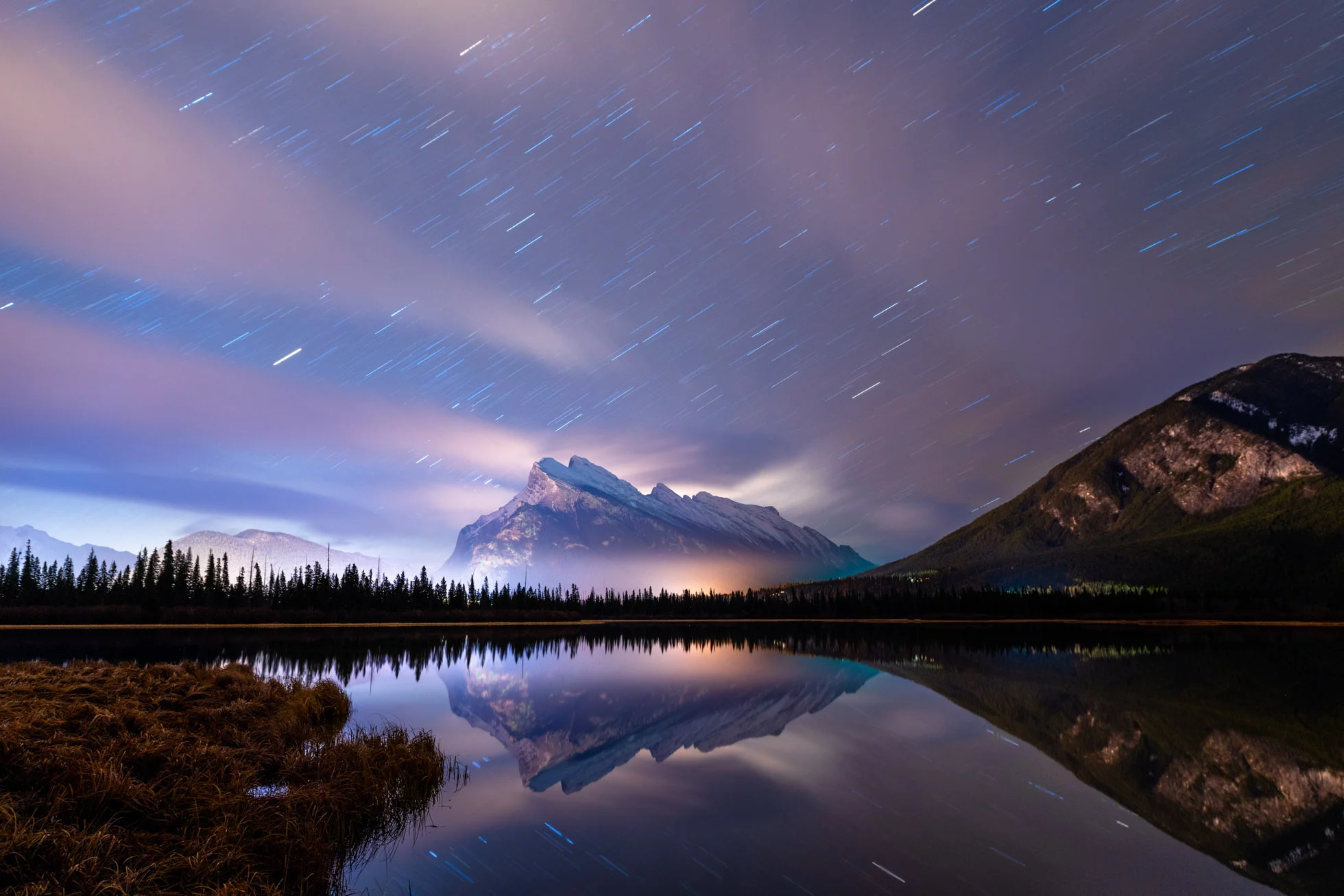
The first night in Canada in November, we ran over to Vermilion Lakes for a little star shooting. This capture is an 8 minute exposure of the stars over Mt. Rundle.
If you made it this far, thanks for staying with me through some of my favorite landscape photographic moments of 2018. I’m looking forward to many more adventures in 2019 including 2 Magic in the Teton retreats, Click Away, the Insta Inspire Retreat, and some new ideas I’m working on!
Happy 2019!
Serenity in Hawaii
One of the reasons I love landscape & nature photography so much is the peace and serenity it brings to my mind and life. There is something about being out in nature watching the clouds float through the sky or the waves crashing on the shore that brings a sense of calm.
So I’m very honored to join a talented and kind group of women for a Serenity Project blog circle.
When it comes to serenity, the island of Kauai pretty much epitomizes the idea of ‘serenity’. Imagine the clouds just floating over the mountains as the oceans waves lap along the shore. Whenever I shoot the ocean, I love to experiment with the shutter speed to capture the movement of the water in different ways. Sometimes I like to freeze the motion but often I love to shoot long exposures. Sometimes in the 1/4 of a second to 3 second range and sometimes really long exposures like a minute or more to capture movement in the clouds as well.


Another thing I love to do is use a slow shutter speed and use a panning effect to create a dreamy abstract image of the water and sky.

And I love when a shutter speed around .6 seconds really creates a streaking of the water.

Head on over to the blog of my talented friend Nancy Armstrong and continue the circle from there! Hope you have a wonderful holiday season!
7 Reasons I Don't Shoot EVERYDAY!
If you find it stressful to shoot everyday or are feeling guilty for not shooting more often, allow me to let you off the hook. Don’t get me wrong, there are many great reasons and benefits to shooting everyday. And when I began my photography journey 8 years ago, I did shoot everyday and continued to do so for at least 2 years if not 3, or even 4. While I never completed an official ‘365’ I guarantee I did a couple. I shot everyday out of love for learning and because I felt inspired to shoot everyday. Because I was constantly shooting and evaluating my images, my learning was fast and furious and I have many memories & images to show for it. I would never discourage you from shooting everyday if you are inspired to do so, but if you are at a point in your photography that you aren’t feeling that constant inspiration, I believe it is ok and sometimes beneficial not to pick up the camera. So allow me to give you a few reasons to ease your guilt!

Amazing Sunset during the 2018 Magic in the Tetons Retreat
Before we begin though, I think it is important to recognize that there are 2 situations in which we pick up our camera to shoot. The first is when a moment speaks to us so strongly that we instinctively reach for our camera. We may be inspired to capture some amazing light, a touching or memorable moment among our loved ones, a sudden sighting of wildlife out our window, or an epic sunset, etc. For this reason, my camera is kept close by in the center of my house. It is at the ready for these moments!
The second situation is more planned, set up, or manipulated. This may be heading out for a sunrise landscape session, setting up a macro, self portrait, or still life shoot, or grabbing the camera and kids with the purpose of a photo session in a particular setting or activity. When I was first learning, I took this approach often but these days, it is harder for me to find a good window of time, or when there is, the energy to capitalize on it.
So here are a few reasons that support “not shooting everyday”
1) Avoiding Burnout - Anything you do at a high intensity for a long time can lead to burnout. This is especially true if you begin feeling less than inspired or self motivated to keep up this intensity. If you are constantly pushing yourself to keep doing something even if you aren’t feeling like it, burn out is more likely. Allowing yourself to take a break when you aren’t inspired allows you to recharge and let the creativity come naturally.
2) It gives you the freedom to shoot a lot in particular inspiring situations (such as on a vacation) and indulge in spending time with those images without adding more images to your cue or backlog. This is a big one for me personally. When we travel, I come home with hundreds (sometimes thousands!) of images of both family and landscapes and these are some of my most treasured images. I want time to work through those images and I know that shooting more on the heels of this travel will just add to my unedited archives.

Long Exposure during a gorgeous sunset on the island of Kauai

My husband and youngest son in the waves in Kauai
3) Post Processing Boost! Not only does the time allow me to go through those unedited archives and keep me from adding more to my to-do list, but it gives me time to expand and fine tune my post processing tools and vision. Editing is a very important part of this art and an additional way we put our own voice into our images. Gifting ourselves the time to spend on this aspect of our art and not rushing ourselves along is so important to growing our imagery. This time editing also allows me to reflect on what I might do differently in the field next time.

Sunset glow at Emerald Lake in Yoho National Park
4) It means I pick up the camera when I am truly inspired, which I believe will lead to images I love rather than images I took because I needed a ‘shot for the day’. Now…don’t get me wrong, there is definitely value in pushing yourself to be creative and get that daily shot. But at this point in my photography, I know what will speak to me and what won’t. And with that extensive backlog I mention earlier, if a shot doesn’t impress me, it won’t move into the editing cue. So I choose not to add more clutter to my EHDs unless I know it is worth it. Quality over quantity.
5) Taking that daily shot off your to-do list can free you up to getting something else done. I know when other life is weighing me down, sometimes I need to tackle other tasks so that my brain can be less cluttered and distracted, opening up my mind to creativity.

A little abstract panning in the Tetons during the Magic in the Tetons retreat
6) Observe and Experience life without the camera up to your eye. Taking the opportunity to simply see the beauty and moments in life can help rejuvenate your inspiration. Taking away the pressure to capture every moment can allow you to recharge and inspire your creative eye. Other activities can spark ideas for photographic ideas. Or perhaps some time reading about creative techniques will bring ideas for something new to try!
7) Breaks are good for the mind, body and soul. Even in things we love, breaks are good, allowing us to feel a continued passion and creativity. And I believe even when we are learning new things, giving space in our practice can allow the sub conscious to digest what we are learning. While repetition and practice are valuable no doubt, so is physical and mental rest. As a former freelance harpist, I will always remember coming back from a two week vacation to my gig playing the harp for the afternoon tea at the Drake Hotel in Chicago. I wondered how it would feel to play after two weeks away, fearing I’d be rusty. And I distinctly remember being surprised by the way my fingers felt so light and fluid over the strings, more so than before my break. Additionally, in our practices of art, music, sports, etc., quality practice can be more important than quantity.

An 8 minute exposure created star trails over Mt. Rundle in Banff National Park
So if you are inspired to shoot everyday, by all means, continue on! But if you have days you aren’t feeling it, I offer you these reasons to give yourself permission to let the camera sit until the next time you feel inspired. I guarantee the inspiration will come if you give it the space to return!
Check out my online workshop, mentoring, or ladies’ landscape photography retreats for educational opportunities.
Hawaiian Nights
When my family and I vacationed in Kauai this past summer, we were fortunate to be there at a time with little moonlight and rather dark skies. While the skies in Kauai are frequently filled with clouds, they move through the sky at a fast pace and I took the opportunity on several nights to get out and shoot the stars. Even with wispy clouds, I was in love with what my camera captured.
It is always a little intimidating to head out in the dark night but I knew I’d regret it if I didn’t take advantage of the chance. The more I shoot at night the more I love it. Every time I shoot, I find myself learning something new & fine tuning my process. There is something magical about the night sky and I never cease to be amazed at what my camera can capture that the naked eye cannot see!


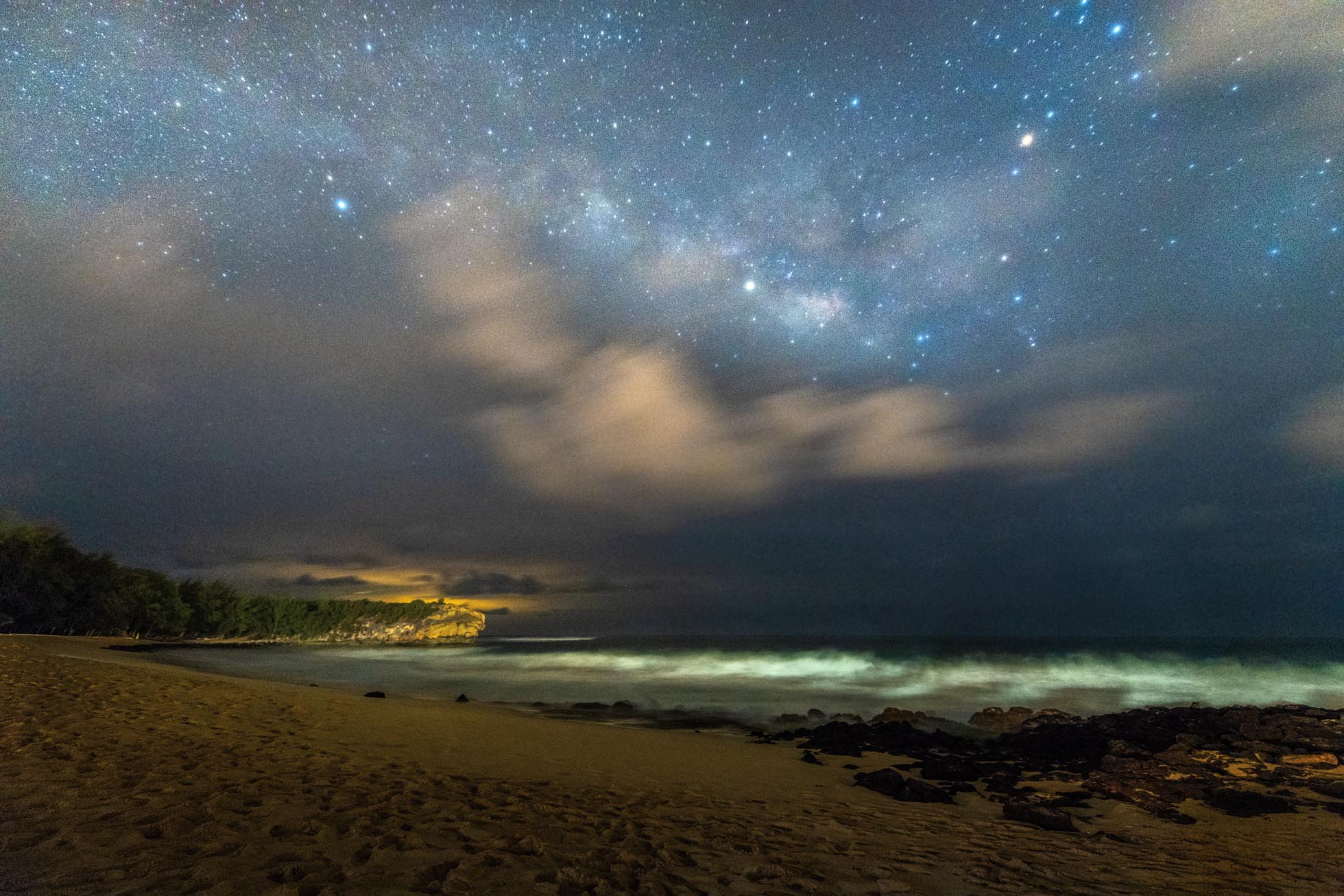
If you haven’t ventured out to shoot the night sky, I’d encourage you to try! It is quite an adrenaline rush. Just make sure to be safe if you go! And stay tuned for some tips on Astro Photography to come soon :)
9 Tips for Creative Long Exposures
One of my very favorite things to do when shooting nature and landscapes is to experiment with long exposures Anytime I have the opportunity to get a creative exposure of clouds or water, I try to take it.
60 seconds in Grand Teton National Park - using a 10 stop filter.
Here are some tips to help you find success when experimenting with long exposures:
1) A tripod is your best friend. I know, I know, they are cumbersome and a pain to carry but are necessary so that you can keep your frame stable throughout the long exposure. Make sure your tripod is steady and secure.
2) Invest in good Neutral Density Filters. I recommend having a 3 stop, 6 stop and 10 stop ND filter in your bag.. In brighter light and to get 30 second or longer exposures, you will often need a 10 stop filter. In lower light and/or an exposure of just a couple seconds, a 6 stop filter may be sufficient. For even longer exposures in daylight you can use a 15 stop filter as well, or you can stack a 10 stop with a 3 stop or 6 stop.

4 seconds at Natural Bridge in Yoho National Park - using a 6 stop filter.
3) Compose your frame and focus for the desired depth of field BEFORE putting the filter in front of the lens. Once you put a 10 stop filter on, you can't see through to focus and compose.
4) Set the new exposure BEFORE putting the filter on the lens. Find your proper exposure without the filter on. Then you can use a Long Exposure Calculator App to find the new shutter speed after you put on the filter. Usually you will need to max out your ISO and aperture unless you are shooting in really low light. For example, say I set my ISO to 100 and aperture to f/22 and my base shutter speed is 1/80. If I enter into the app a 1/80 shutter speed and tell it I am using a 10 stop filter, the app will then tell me that a 13 second shutter speed will give me the same exposure with the filter on. So then I will change my shutter speed to 13 seconds before I put on the filter. The less I touch my camera after putting on the filter, the better.

4 minute exposure using a 15 stop ND filter in Grand Teton National Park.
5) Use a Shutter release remote. These are critical if you are using a shutter speed slower than 30 seconds as you must then turn to bulb mode. But even out of bulb mode, using a shutter release is one more way to eliminate the chances of bumping your frame and increasing sharp focus. Your camera’s timer is also a great option. I often use a 2 second timer.
6) Cover your eyepiece viewfinder to prevent light from coming into the frame as this creates undesirable light leaks. My Nikon D810 and D850 have a little door that covers the eyepiece. But otherwise, I would cover it with a black/dark cloth or anything else that will keep the light out.
7) Check your histogram. Sometimes finding the right exposure with the filter can be a bit of trial and error. Don’t rely on the app or the LCD screen. Make sure the histogram is toward the right without climbing the right wall. If you need to bump exposure, lower that shutter speed, OR if your shutter speed is where you want it for creative effect, raise your ISO or open up your aperture.

2 minutes with a 10 stop filter at Lake Louise in Alberta, Canada
8) Consider the creative effect and mood of the image you want to create! When choosing your shutter speed length, think about your creative vision. For really streaked clouds, you may need a 60 second exposure or even a few minutes. If clouds are moving fast, 15-30 seconds may create the look you desire. With water, you may want to create a really smooth effect with 20-60 seconds or perhaps you want to leave more texture in the water with a 1 second exposure or a fraction of a second.

2.5 seconds in Kauai
9) Lastly, look at the other areas of your frame. Do you have unwanted blur in other areas of your frame…such as trees, grasses or other foliage? If so, capture the exact composed frame with a faster speed so you can composite the two images later in post processing.

3 minute exposure for the sky combined with a fast shutter for the foreground grasses. Shot in the prairie of Illinois.
It's a little addicting, so don't say I didn't warn you! Are you looking for filters for long exposure photography? Check out Maven Filters.*
Check out my online workshop, mentoring, or ladies’ landscape photography retreats for educational opportunities.
*Affiliate Link
Viewpoints ~ My Canadian Rockies View ~ Part 2
Last month, I shared some of my images from our Canadian Rockies vacation, but those were hardly the end of my captures from this spectacular area of the world. Despite the smoke from the wildfires, I still came home with so many images that I love. From the Kananaskis to Jasper National Park, I was in awe of the miles and miles and miles of tall rocky peaks lining the views from the highway and beyond. I think you could explore this area for a lifetime and never see it all. I look forward to going back and seeing new places as well as revisiting those I saw this time, just in different light.
Some more of the images I captured during our two week visit.....
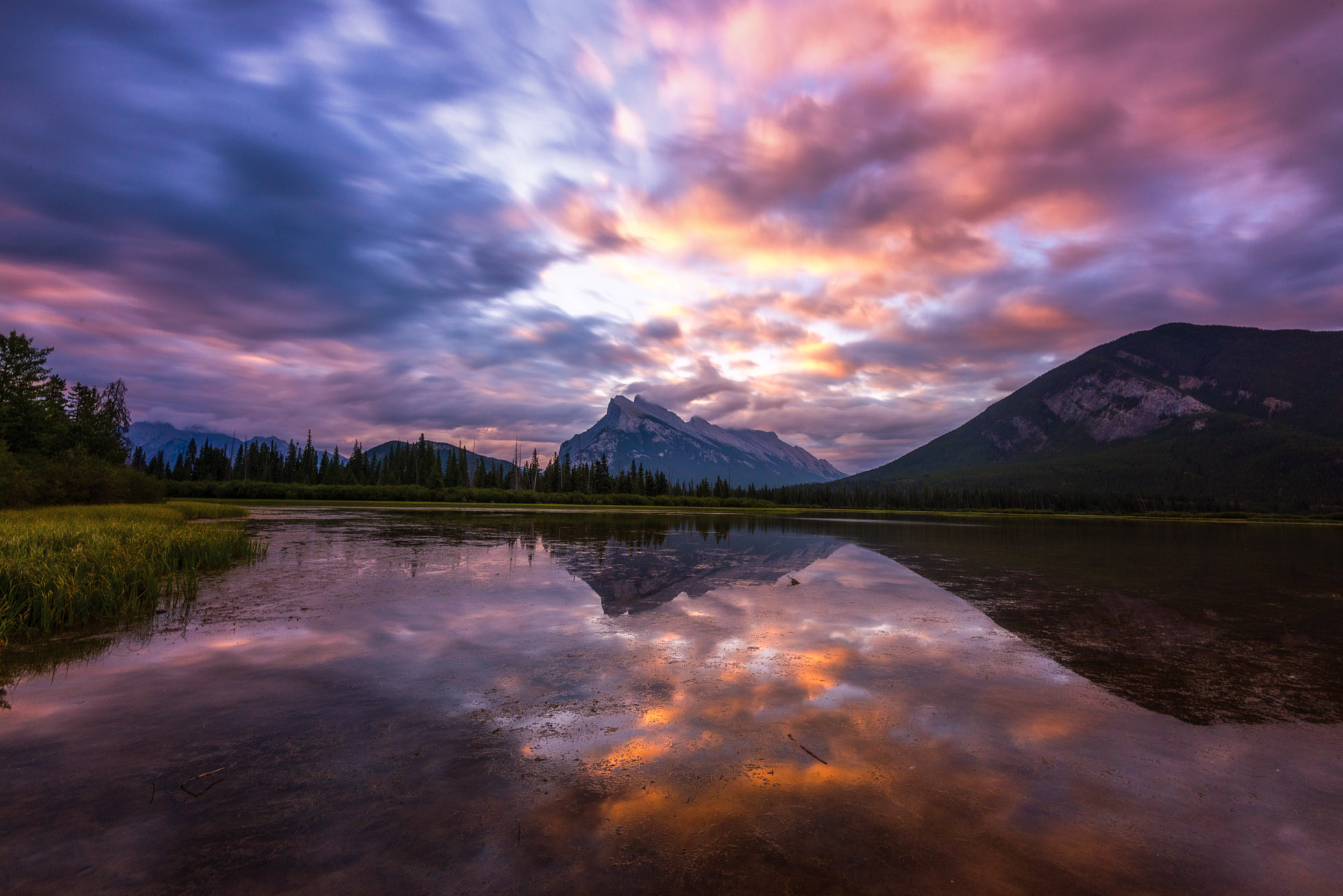
Mt. Rundle reflecting in Vermilion Lakes at Sunrise

Morning light at Pyramid Lake

Beautiful Elbow Lake

The Gorgeous Athabasca Falls

Lake Louise at sunset
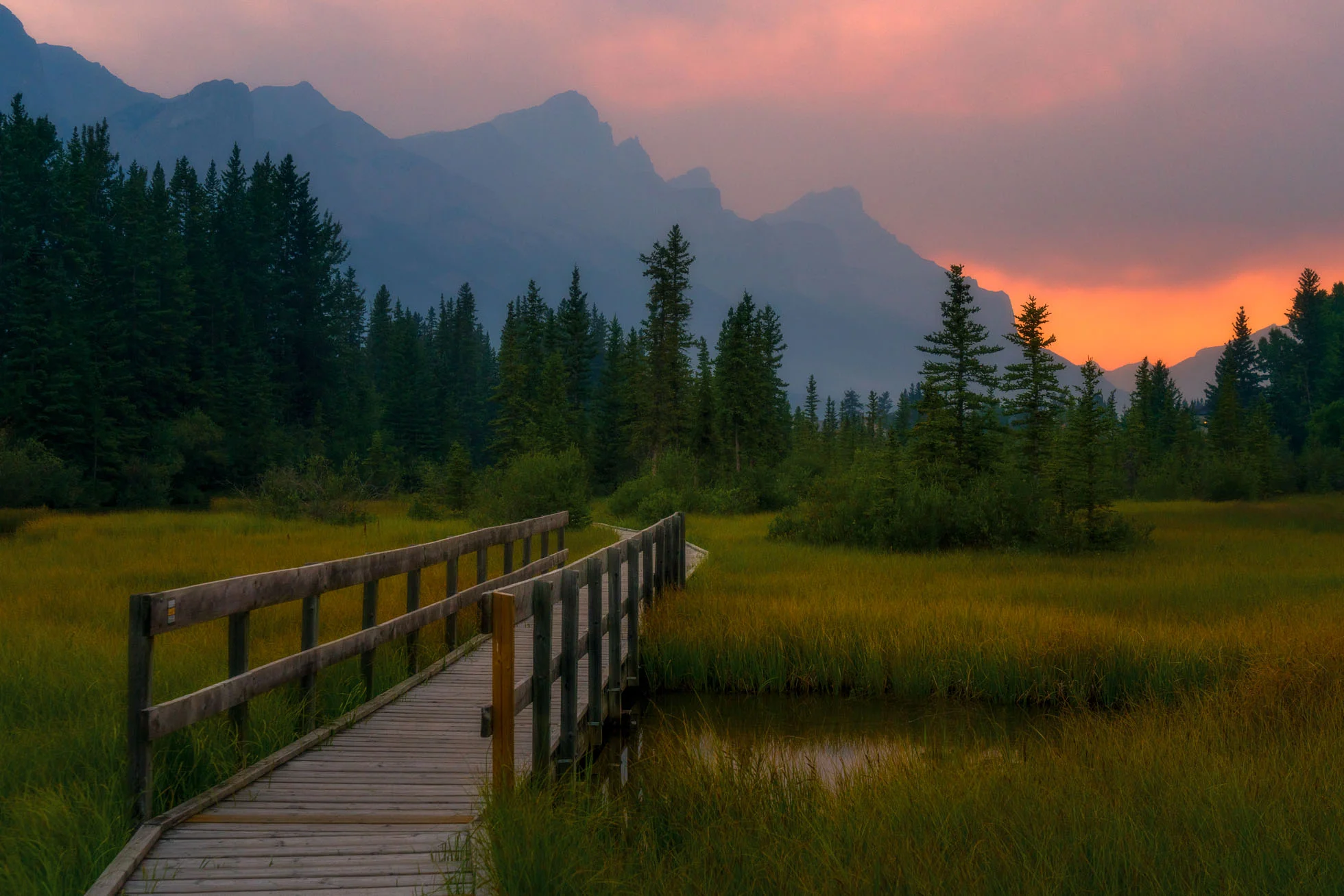
A fiery sunset evening in Canmore
I know you won't want to miss any of the beautiful imagery my friends have to share this week, so please continue the circle and click over to my friend, Amy Miller of Big Woods Creative.